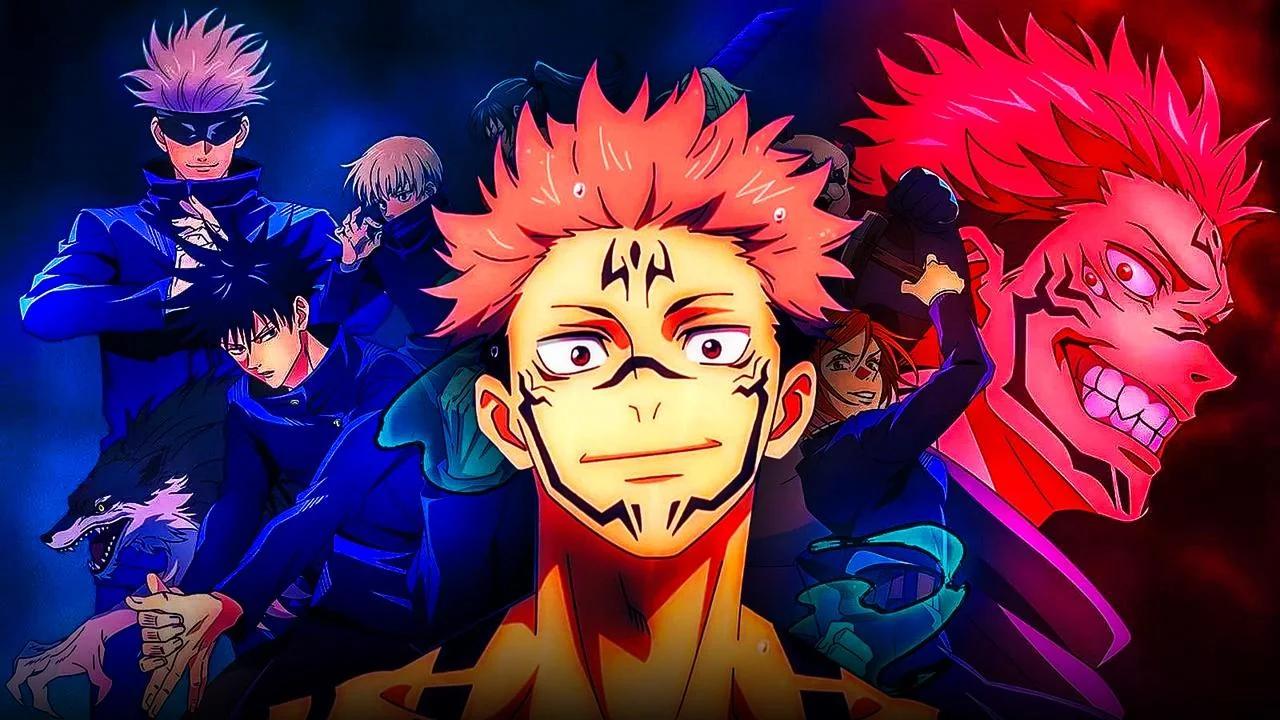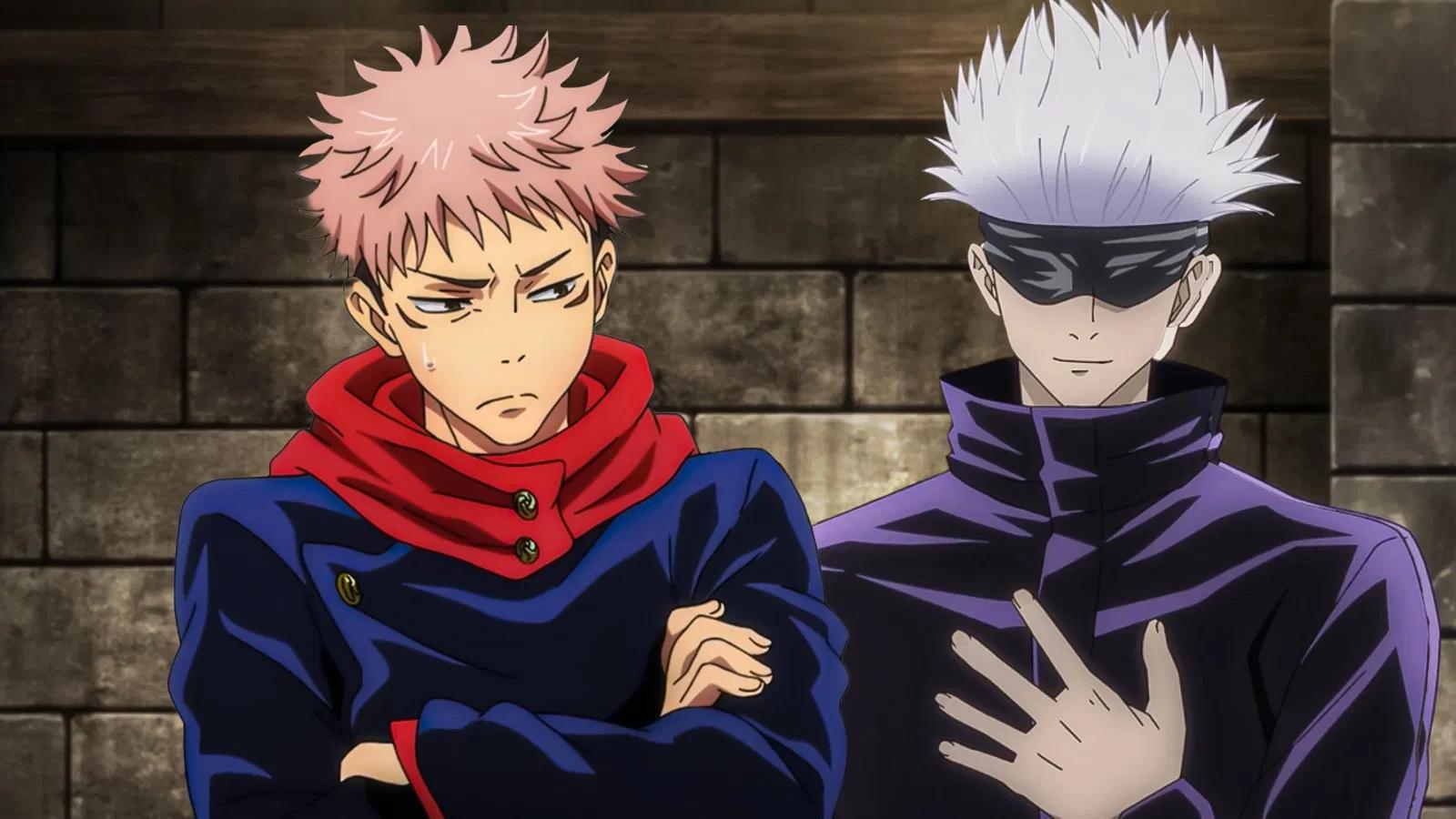
If you watched Jujutsu Kaisen's third season and found yourself confused about what the Culling Game actually is, you're not alone. The arc introduces new rules, new players, new mechanics, and a hidden purpose that gets revealed bit-by-bit. This article breaks it all down cleanly.
By the end, you’ll understand how the game works, who the key players are, why Yuji and Megumi needed to change the rules instead of simply winning fights, and what Kenjaku was truly using the Culling Game to accomplish.
One note before we begin: this article covers all of the Culling Game material in Jujutsu Kaisen Season 3, but it also explains major manga revelations that occur later in the arc, including the game’s full purpose and Kenjaku’s endgame, much of which will be revealed in Season 4 of the anime. Anime-only viewers who want to avoid future spoilers should stop here. And if you're still early on in the series, refer to my JJK Watch Order Guide to make sure you experience all the lore in the order it was intended.
The short version of how the Culling Game works
Kenjaku creates ten barrier colonies across Japan and fills them with two kinds of players: reincarnated ancient sorcerers and modern people whose cursed techniques he has awakened. Players earn points by killing other players, they die if they refuse to participate, and they can spend points to add new rules to the game. Yuji and Megumi enter the game in order to save Tsumiki and also to find Angel, whose help they need in ordeer to free Gojo. Underneath it all, Kenjaku is using the colonies as a ritual system to prepare Japan for a cataclysmic merger with Tengen.
What is the Culling Game?
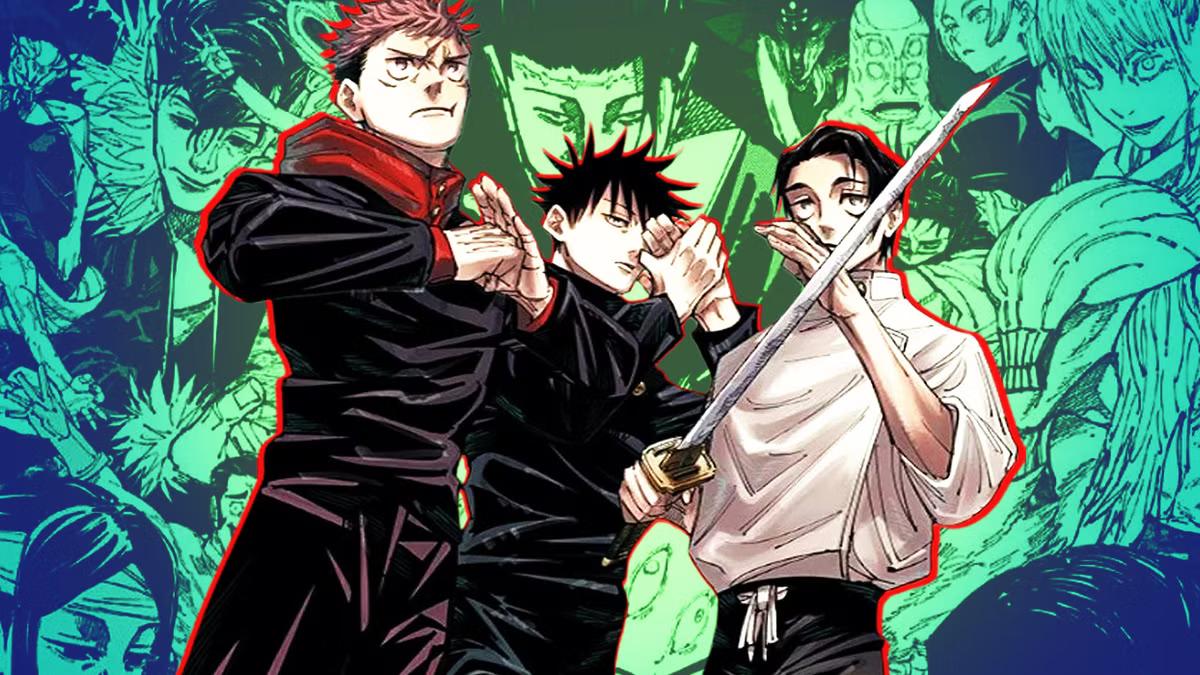
On the surface, the Culling Game looks like a classic battle royale. Sorcerers are trapped inside barriers covering different regions of Japan, forced to fight each other for points, with death as the penalty for falling behind. But that's just the cover story.
The actual purpose, which the main characters piece together gradually, is that the tournament is a grand ritual. The colonies, barriers, and violence inside them are all part of a process that uses cursed energy to prepare the people of Japan for a forced merger with Master Tengen.
The game was never really about finding the strongest fighter. It was about generating enough chaos, enough death, and enough cursed energy to fuel an experiment that Kenjaku had been planning for over a thousand years.
We'll dive further into that, but first lets establish the rules and mechanics. It's necessary to understand how the game was set up in order to full see why Kenjaku designed it the way he did.
The rules, explained
The Culling Game launched with eight rules, though more were added during the game. The rules are upheld through binding vows, which are supernatural contracts that impose severe consequences if their terms are broken.
The rules are administered by shikigami called Kogane that serve as each player's personal interface to the game.
Rule 1: Any person who awakens a cursed technique must declare their participation in the Culling Game within 19 days at a colony of their choice.
Rule 2: Anyone who breaks Rule 1 will have their cursed technique stripped.
- In practice, removing someone's cursed technique is a death sentence. Jujutsu techniques are tied to the brain, and the removal of a technique causes fatal damage.
Rule 3: Non-players who enter a colony automatically become players and are considered to have agreed to participate.
- Civilians already inside the barriers when the colonies formed were given a chance to leave at first, which makes the Culling Game appear voluntary. This is important because the idea that players have consented to the game strengthens the binding vows that hold them to its rules.
Rule 4: Players earn points by killing other players.
- This is the engine of the game. Kenjaku is not simply forcing sorcerers into arenas and hoping violence happens. The rules explicitly turn murder into the only way to gain points, which is why the Culling Game functions as both a death match and a cursed-energy harvesting system.
Rule 5: Points are assigned based on the value the game master places on each player's life. Sorcerers are worth 5 points. Non-sorcerers are worth 1 point.
- Kenjaku himself is not the game master. The actual "game master" is left vague, but it appears to be a reference to the operating system of the game itself, which is managed by the Kogane shikigami. This detail is important because it protects both Kenjaku and the integrity of the game. Seeking out and killing him will not stop the game.
Rule 6: Players can spend 100 points to propose a new rule to the game master.
- This is the rule that Megumi and Yuji's entire strategy hinges on. Their goal from the moment they enter the game is to find players with 100+ points and persuade or pressure them into spending those points on rules that would let them exit without killing anyone and more specifically, that would allow Megumi's sister Tsumiki to leave.
Rule 7: The game master must accept any proposed rule unless it has a marked and long-lasting effect on the Culling Game.
- This restriction places guardrails on Rule 6. Players can change the rules, but they cannot add a rule that simply dismantles the game outright. That's why Yuji, Megumi, and their allies have to find loopholes rather than proposing a rule like "the Culling Game ends right now".
Rule 8: If a player's score remains unchanged for 19 days, they will have their cursed technique removed.
- This rule forces constant participation. You can't simply hide and wait out the game. You have to keep scoring, which means you have to keep fighting. Combined with Rule 4, it means that killing other players is mandatory for survival.
Rules 9, 10, 11, and 12 were added by players during the game:
Rule 9 (added by Kashimo): Players can view information about other players, including name, points, colony location, and how many rules they've added.
Rule 10 (added by Higuruma on Yuji's behalf): Players can freely transfer points to other players. This is the rule that effectively breaks the killing requirement. If players can pass a single point back and forth, their score technically changes every 19 days and they can survive without hurting anyone.
Rule 11 (added by Megumi): A player can withdraw from the game by inviting a substitute from outside the colony and spending 100 points. This is the exit mechanism Megumi adds as a way to get Tsumiki out.
Rule 12 (added by Yorozu): Players may freely enter and exit colonies.
Finally, Rules 13, 14, and 15 were later added by Kenjaku:
Rule 13: No new players can join the Culling Game after 9:09 PM on November 18, 2018.
Rule 14: The Culling Game ends when all players except Suguru Geto, Megumi Fushiguro, and Shiori Himi are dead.
Rule 15: Authority to activate the Great Merger is transferred to Megumi Fushiguro.
- We'll get more into Rules 13 - 15 later because these rules are more about Kenjaku's hidden plan than running the game itself.
In total, the rules are structured as both game design and behavioral incentive. Rules 1 and 2 force awakened sorcerers into the colonies. Rule 3 traps civilians, which raises the stakes and providers fodder. Rule 8 prevents waiting it out, while Rules 4 & 5 encourage fights to the death between sorcerers. Every rule pushes players toward maximum violence and maximum cursed energy output, which is the entire point of the game.
The colonies
Ten colonies were established across Japan, each surrounded by barriers that cut off communication with the outside world. They're positioned in a line down the archipelago with the one notable exception being Hokkaido, which is excluded because it is treated as a vast sacred zone with separate barrier conditions from the rest of Japan.
The Tokyo colonies become the focus of Yuji, Megumi, Hakari, and Panda’s early efforts, while the Sendai colony develops into a brutal stalemate between several extremely powerful players until Yuta Okkotsu arrives to break it. Kenjaku purposely seeded the colonies with strong sorcerers who would be likely to generate maximum cursed energy during their fights.
To add to the difficulty, players entering a colony are not simply allowed to walk in together and group up. Upon entry, they are randomly transported to one of several predetermined locations inside the barrier. That is why Yuji and Megumi are separated immediately after entering Tokyo No. 1 Colony.
The key players
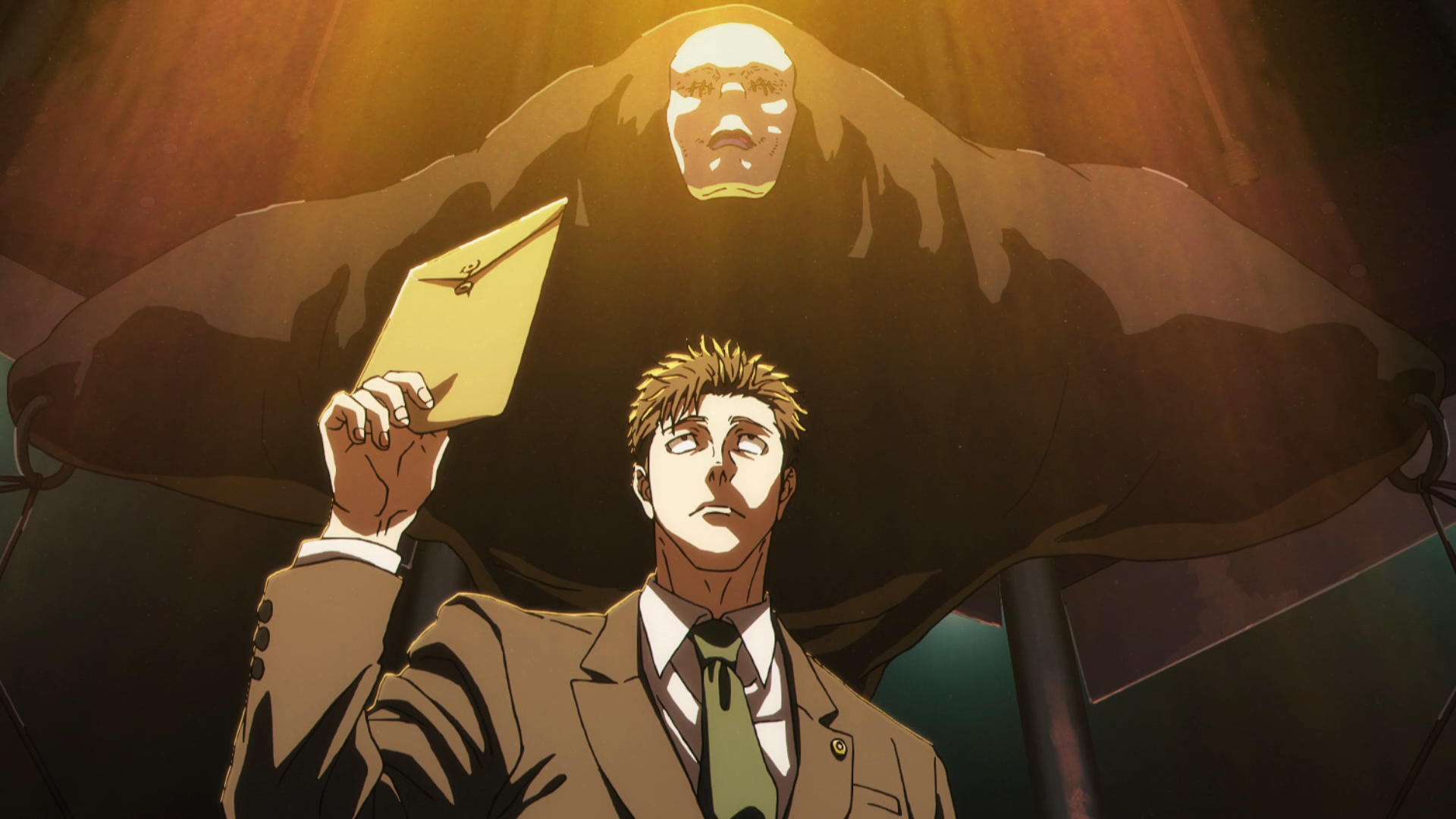
The player pool of the game is unique because Kenjaku prepared it in two different ways. Some participants are ancient sorcerers reincarnated in modern vessels, like Kashimo. Others are ordinary modern people whose cursed techniques were awakened by Kenjaku, like Higuruma and Tsumiki.
These are some of the most important key players:
Hajime Kashimo is one of the ancient sorcerers reincarnated by Kenjaku. He's a fighter from 400 years ago who agreed to be brought into the modern era under one condition: the chance to fight Sukuna. He's one of the most powerful players in the game and the first to spend 100 points to add a rule, which he uses to gain information about other players.
Kashimo isn't in the game because Kenjaku made him participate. He's in the game because he was bored in his own era and wanted a worthy opponent.
Hiromi Higuruma is the opposite of Kashimo in almost every way. He's a modern sorcerer, not an ancient reincarnation, and he's a defense attorney who awakened his cursed technique during a fit of rage when his client was unjustly convicted. He has no interest in the game's ideology, no desire to fight, and no allegiance to anyone. What he has is a Domain Expansion that functions as a courtroom, where he can strip other sorcerers of their cursed techniques if he finds them guilty. He's one of only two players to reach 100 points in the Tokyo colonies.
Yuji's goal upon entering the game is to find Higuruma and persuade him to use his points to add a rule allowing Tsumiki to exit. The way Yuji does this, by presenting himself honestly and appealing to Higuruma's sense of justice, is a key moment of character growth in Yuji's arc.
Kinji Hakari is a suspended Jujutsu High student who runs an underground fighting operation and operates entirely outside the school's rules. Gojo reportedly considered him one of the few students with the potential to eventually surpass him, which is high praise. His cursed technique, Private Pure Love Train, is activated through his Domain Expansion and functions like a pachinko machine. It's unpredictable and costly most of the time, but when he hits the jackpot, he gains an enormous advantage. For four minutes and eleven seconds after a jackpot, his body overflows with effectively limitless cursed energy, giving him automatic reverse cursed technique (RCT) that heals damage faster than it can be dealt.
The jackpot state is what makes him formidable enough to be a real threat to Kashimo, who had dispatched every other opponent in his colony without much effort.
The Angel is the player that Megumi's group needs most and can't initially locate. Her actual name is Hana Kurusu, a modern sorcerer who is also the vessel for an ancient sorcerer's soul. Her technique is Jacob's Ladder, which can extinguish any cursed technique it touches.
She's important because she has the only known method of unlocking the Prison Realm, which is where Gojo was locked away after Shibuya. Her Jacob's Ladder technique can be used on the "back" of the Prison Realm, thereby unsealing it and freeing Gojo. Finding the Angel and freeing Gojo is Megumi and Yuji's secondary objective in the Culling Game, after getting Tsumiki out.
Yuta Okkotsu enters the Sendai colony separately from the main group and operates mostly alone. Where Yuji and Megumi are trying to navigate the game's rules in a way that minimizes killing, Yuta's approach is more direct. The Sendai colony has been locked in a four-way stalemate between ancient sorcerers of roughly equal power, and Yuta's arrival breaks the deadlock.
His role in the Culling Game is to demonstrate exactly what a high-powered sorcerer can do for the heroes' side, and this Sendai fights are some of the most impressive and highly-praised of the arc.
What Kenjaku was actually doing

Kenjaku didn't actually care about the tournament itself. It was only a means to an end. The true purpose of the Culling Game was to serve as a ritual for merging Tengen with the people of Japan.
Using the ritual structure of the colonies and the cursed energy circulating through the game, Kenjaku would initiate a superposition merger using Tengen's barrier to bring Japanese people "to the other side."
To understand why that matters, you need to understand what Tengen is.
Master Tengen is an immortal sorcerer who has existed for over a thousand years through a process of periodic renewal. They absorb a specially chosen vessel called the Star Plasma Vessel to reset their aging. When the vessel meant for the most recent renewal was killed by Kenjaku before the process could complete, Tengen's aging continued unchecked. They didn't die, but their soul evolved beyond normal human limits, to the point where Tengen's consciousness effectively became part of the world itself. It became a vast, borderless presence that was no longer quite human.
Kenjaku's plan was to use the cursed energy generated by the Culling Game as the fuel for a merger ritual. Tengen's barrier, which already extended across Japan, would be used as the channel. If the ritual was completed, every non-sorcerer in Japan would be merged with Tengen, dissolving the boundaries between individual humans and creating something entirely new. They would become beings that are simultaneously present and not present, with no separation between their cursed energy and anyone else's.
The result, as Tengen describes it, would be catastrophic and irreversible. A single person among the merged population experiencing a moment of rage or grief would flood the entire merged consciousness with that impurity. It would be a cataclysm that also ends individuality on a national scale.
The binding vow structure is what makes all of this work. Kenjaku designed the game so that he is not the game master, which means the game continues even if he's killed. The rules run themselves, the barriers collect the cursed energy, and the ritual progresses automatically once conditions are met. He spent over a thousand years setting up a system that could operate without him because he knew that eventually someone would try to stop him by killing him.
There's also a grimly funny dimension to Kenjaku's motivation that becomes revealed later. After centuries of working towards this apocalyptic event, his stated reason for doing all of this is nothing more than curiosity. He wanted to see what would happen. He wanted to create chaos beyond his own ability to control, and he reveals that he's really only doing it because the idea sounded fun to him.
This detail reframes Kenjaku as a villain. He's not ideological the way Mahito was ideological, and he's not driven by hatred or grievance. He's a mad scientist who stopped caring about the subjects of his experiments at some point in the last thousand years, if he ever did, and what remains is pure curiosity about what happens when you push things past their limits. The Culling Game is his largest experiment. Everyone in it, ancient sorcerers, modern sorcerers, civilians, Yuji, Megumi, all of them, are just variables in a result he wants to observe.
In order to draw this experiment to a close, Kenjaku added Rules 13 and 14. Rule 13 prevents any new players from joining after 9:09 PM on November 18, 2018, freezing the game’s roster in place. That matters because Rule 14 defines the game’s end state: the Culling Game ends when all players are dead except for Suguru Geto, Megumi Fushiguro, and Shiori Himi. This only works if new players can no longer enter. Kenjaku is effectively closing enrollment, defining the final survivors, and turning the Culling Game from an ongoing ritual into one that can now be completed.
Even after his death, Kenjaku’s failsafe adds one final rule: Rule 15. This rule transfers authority to activate the merger to Megumi Fushiguro, whose body is then under Sukuna’s control. This further emphasizes Kenjaku’s strategy of separating his own well-being from the game itself, ensuring that his ritual had the greatest possible chance of proceeding.
Why Kenjaku brought foreign soldiers into the Culling Game
Kenjaku’s plan briefly expands beyond Japan when he reveals cursed energy to foreign governments and convinces them that sorcerers could become an extraordinary new energy resource. That sales pitch is mostly a manipulation to get those governments to send troops. Kenjaku knows those governments will send soldiers into the colonies to capture players and secure samples of cursed energy for themselves. Once inside, those soldiers become trapped in the same ritual system as everyone else.
His purpose in doing this is to provide additional fuel for the Culling Game. Ordinary soldiers are badly outmatched by reincarnated sorcerers, cursed spirits, and awakened players, so their arrival creates exactly what Kenjaku wants: more deaths, more fear, and more cursed energy circulating inside the barriers.
The foreign military subplot shows just how coldly Kenjaku thinks. He's not merely sacrificing Japanese civilians and sorcerers to complete the merger. He's willing to engineer an international incident, weaponize human greed, and feed entire military units into the ritual if it helps push his experiment forward.
Why the Culling Game changes JJK as a series
Before the Culling Game, Jujutsu Kaisen had already pushed far past a standard school-battle shonen structure, especially through Shibuya. But the Culling Game changes the kind of conflict the series is built around.
Suddenly the enemy isn't a cursed spirit or even a specific villain. It's a system created by a set of binding vows and rules that no one person can simply fight their way out of. Yuji and Megumi can't punch the Culling Game into submission. Their entire strategy is about working within the rules to change the rules, which is a fundamentally different kind of problem than any the series had previously asked them to solve.
It also radically expands the cast and the world itself in ways that feel very intentional . Every new player the arc introduces, such as Kashimo, Higuruma, and Hakari, exists to provide a different answer to the question of what a person does when forced into a system designed to make them kill. Kashimo's answer is enthusiasm. Higuruma's answer is despair and then renewed purpose. Hakari's answer is to find the chaos enjoyable. The arc is a pressure test, and the variety of responses is what makes it worth watching beyond the fight sequences.
The Culling Game is also where JJK commits fully to its willingness to break things that can't be unbroken. No one feels safe, and decisions made in this arc have consequences that follow the series all the way to its ending. By the time the Culling Game concludes, the world of JJK has changed dramatically, and the version of Yuji who exits the Culling Game is noticeably changed from the one who entered it.
Want to know which JJK character shares your personality? The Jujutsu Kaisen Character Quiz builds a full profile and shows how you stack up against the whole cast.