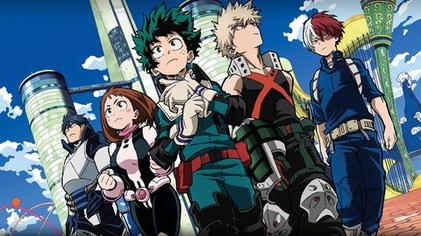
My Hero Academia has one of the largest and most thoughtfully designed power systems in modern anime. When take at face value, quirks are superpowers, but they are also narrative extensions of the people who hold them. The show makes it clear that each quirk reflect something important about the character's psychology, their backstory, or the role they play in the greater narrarative.
This guide covers all My Hero Academia quirks. If you've seen a character in the show use a quirk in any meaningful way, you'll find it here.
Use the interactive character finder below to look up any character by name, quirk, or category. The full written breakdowns for every character are also in the article below the finder.
Note: this page has spoilers for entire anime and manga. If you have not yet finished the series, proceed with caution. Not caught up yet? My MHA Watch Order Guide will give you the best watch order for seasons, movies, and OVAs.
All MHA Characters and Quirks
Class 1-A
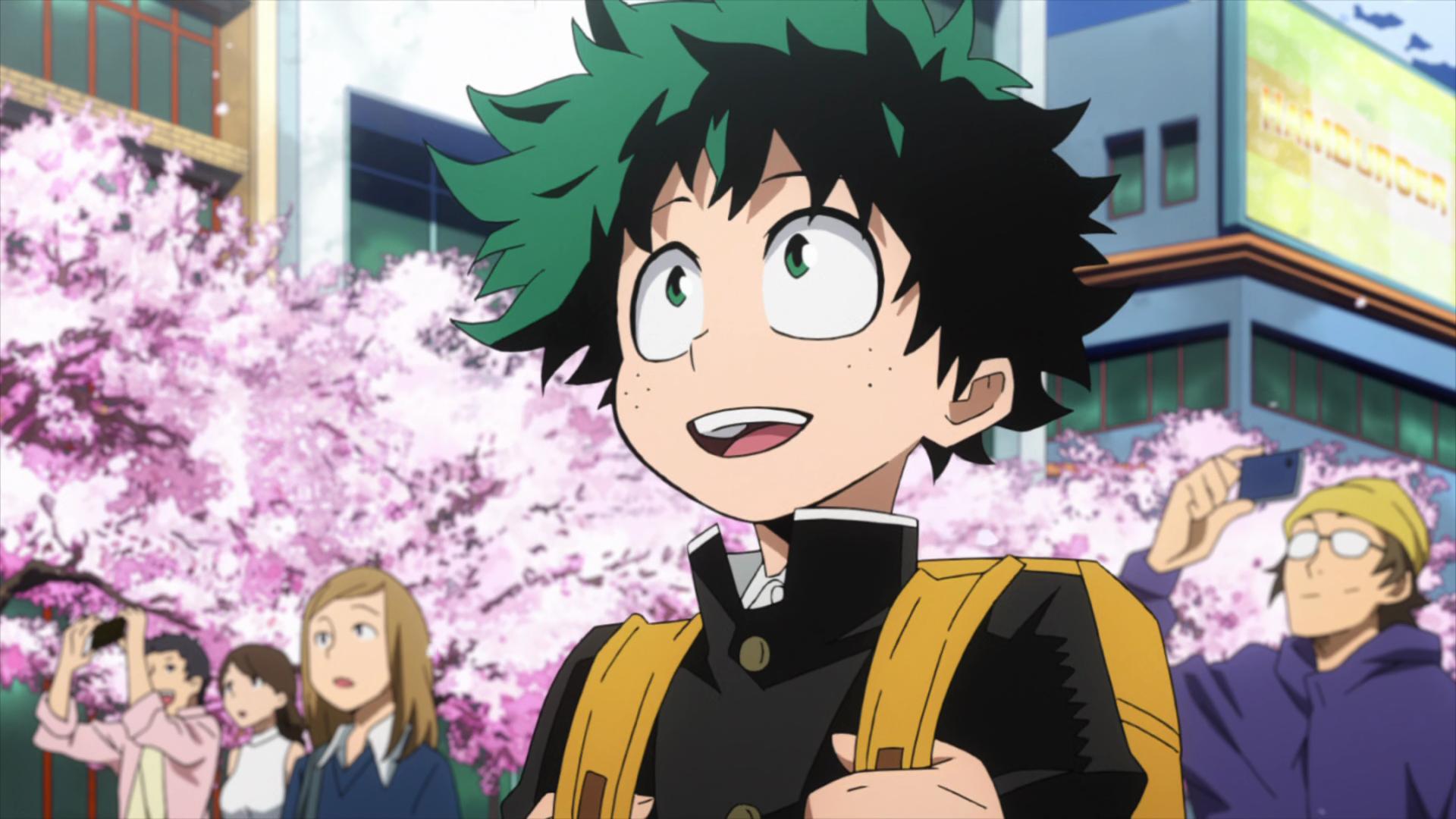
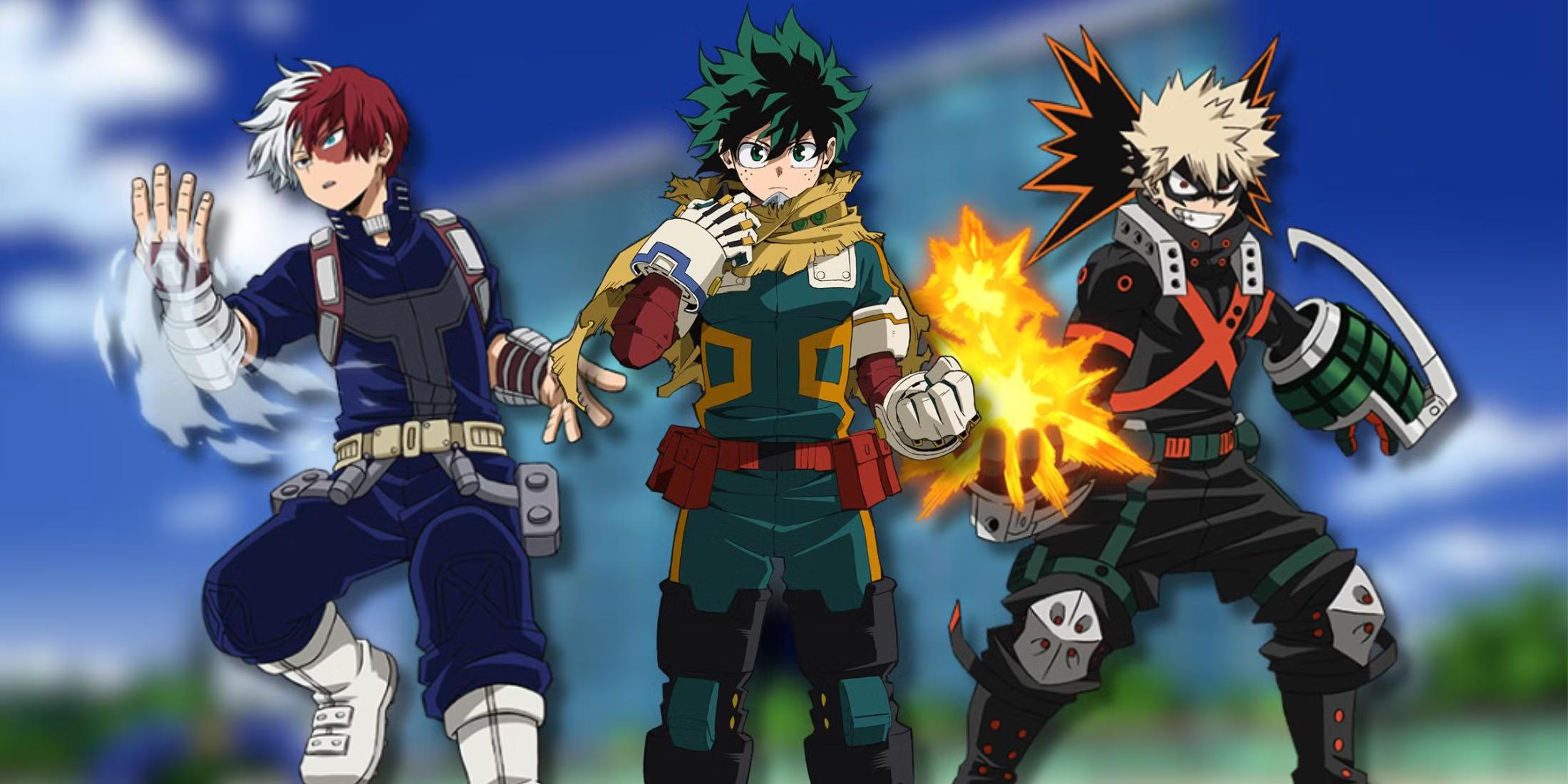
Izuku Midoriya (Deku) — One For All
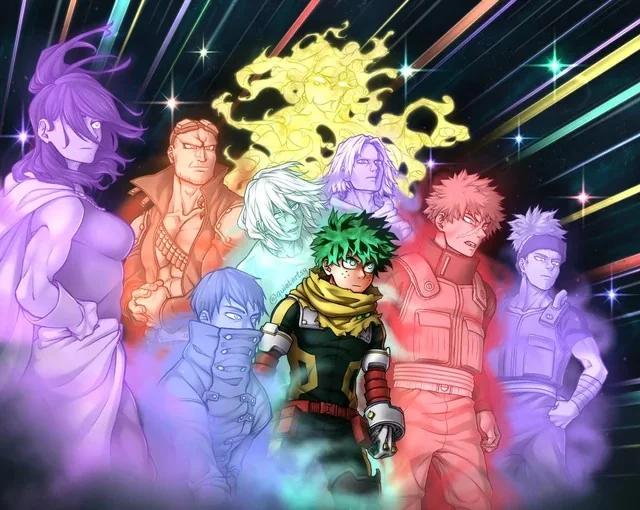
Deku's quirk is the central mystery of the series. One For All is a stockpiling quirk, which means it gets stronger each time it's passed down. By the time it reaches Deku, it's been carrying the energy and willpower of eight previous users for nearly a century.
What makes One For All narratively powerful isn't the raw strength. It's the fact that Deku was born quirkless and was chosen to receive it. Every time he uses it, he's carrying the weight of people who gave their lives to get this power to someone worthy. And his body, for most of the series, can't actually contain what he's wielding. He breaks himself trying to live up to it.
Later in the story, Deku gains access to the individual quirks of the previous users, which turns One For All into a toolkit rather than a single ability. Blackwhip, Fa Jin, Danger Sense, Smokescreen, and Float each belong to someone who came before him.
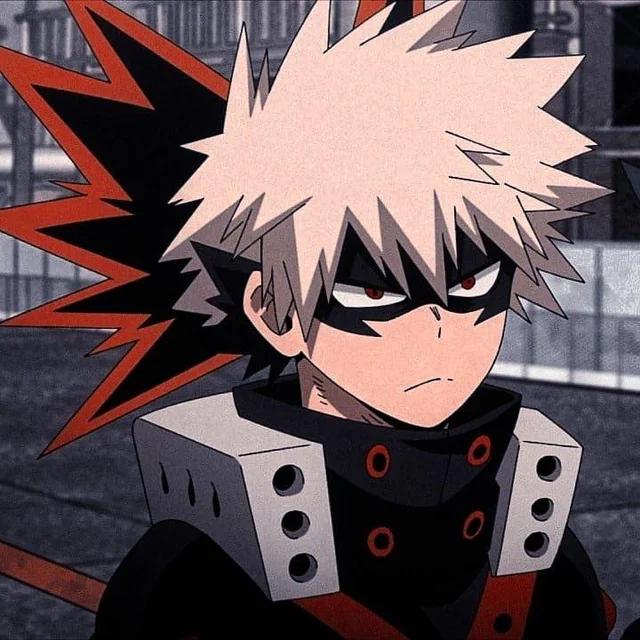
Katsuki Bakugo — Explosion
Bakugo's quirk lets him secrete a nitroglycerin-like sweat from his palms that he can ignite at will. The output scales with how much he sweats, which means the hotter and harder he fights, the more explosive he gets.
It's the perfect quirk for him. Explosion rewards aggression and punishes hesitation, which is exactly how Bakugo operates. He's spent his entire life being told he was going to be the best, and his quirk is loud, fast, and impossible to ignore. Of course it's his.
What the series does cleverly is show the cost. Bakugo's intelligence as a fighter is what keeps his quirk sharp. He's not just blasting. He's calculating angles, conserving sweat, timing detonations, using explosions as propulsion. His quirk looks simple and is anything but.
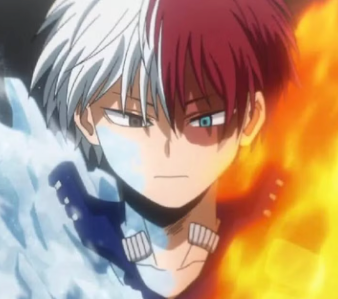
Shoto Todoroki — Half-Cold Half-Hot
Todoroki can generate ice from his right side and fire from his left. His father engineered his birth to produce exactly this quirk, and for most of Todoroki's early life he refused to use his fire out of resentment for the man who gave it to him.
The quirk is one of the most narratively loaded in the series. Every time Todoroki uses only his ice, he's making a statement. Every time he finally uses his fire, he's making a different one. His entire arc is about deciding which parts of his inheritance are actually his and which parts he's going to define on his own terms.
Mechanically, both sides are devastating. He can freeze an entire arena or incinerate an opponent at close range. The limit is temperature regulation. Overuse one side and his body starts to shut down, which forces him to use both, which forces him to grow.
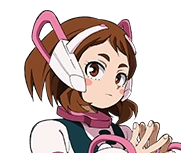
Ochaco Uraraka — Zero Gravity
Ochaco can make anything she touches weightless. The limit is mass dependent, and if she exceeds her capacity she gets violently nauseous. It sounds like a support quirk, and early in the series it mostly is. She's positioning herself as a rescue hero.
What makes Ochaco's quirk interesting is how the series expands it. Later arcs show her using it offensively by floating rubble, creating three-dimensional battlefields, and combining it with martial arts to essentially neutralize gravity as a variable in combat. She's no longer just making things float. She's taking away things that ground her opponents.
Her quirk also fits her psychology. Ochaco is someone who lifts other people up, sometimes at the expense of her own footing. The parallel is not subtle at all.
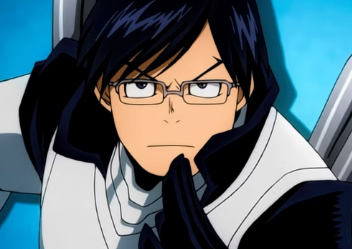
Tenya Iida — Engine
Tenya has engines in his calves that let him run at extreme speeds. The quirk is straightforward, but the character using it is anything but. Tenya comes from a hero family and carries a sense of duty that borders on rigid. When things go wrong for his brother, his quirk becomes a tool for something much darker than racing.
The interesting thing about Engine is its scalability. Tenya trains specific techniques like Recipro Burst for short bursts of maximum speed, and later Recipro Extend for sustained output. His growth as a fighter is measured in how long he can maintain his own power before his engines stall. It's a quirk that rewards discipline, which is exactly the quality Tenya is trying to cultivate in himself.
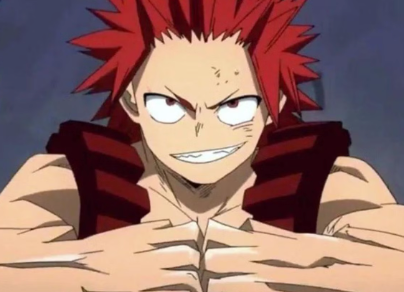
Eijiro Kirishima — Hardening
Kirishima can harden his skin to the point of being nearly invulnerable. At first glance it looks like a defensive quirk, and for a while he treats it that way. He sees himself as a shield for other people.
What makes Hardening compelling is Kirishima's own relationship with it. He doesn't think his quirk is flashy enough. He wonders whether he's really hero material. The arc where he pushes his quirk into Unbreakable, a fully armored form he can only hold for a short time, is one of the series' best because it's not just about getting stronger. It's about a kid deciding he's worth the effort.
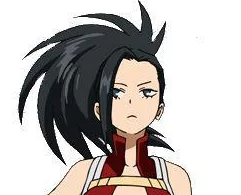
Momo Yaoyorozu — Creation
Momo can create any non-living object from her exposed skin, as long as she understands the molecular structure and has enough body fat to convert. This is one of the most flexible quirks in Class 1-A and one of the most intellectually demanding.
Creation isn't powerful on its own. It's powerful in Momo's hands because she's smart enough to know what to make. She's built cannons, trampolines, insulation, communication devices, and radar equipment mid-fight. The quirk rewards preparation and improvisation in equal measure.
The limit is physical. She has to eat constantly to keep producing, and the more complex the object, the more it costs her. It's a quirk that visibly taxes her, which is part of why her confidence arc matters. She has every reason to trust her own thinking, and the show keeps giving her reasons to learn to.
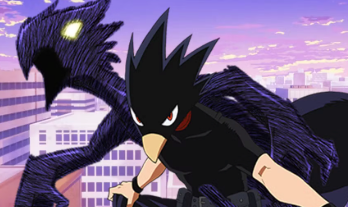
Fumikage Tokoyami — Dark Shadow
Tokoyami has a sentient shadow creature that lives inside him and can extend outward for offense or defense. Dark Shadow is stronger in darkness and weaker in light, which means the quirk is effectively a different weapon depending on the environment.
What the series does with this is interesting. In bright conditions, Dark Shadow is manageable and tactical. In darkness, it becomes nearly uncontrollable and feral. Tokoyami's growth is about learning to communicate with a part of himself he can't fully trust.
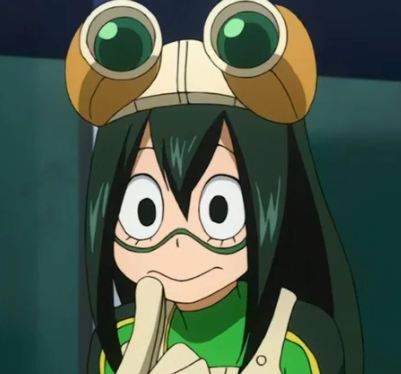
Tsuyu Asui (Froppy) — Frog
Tsuyu has most of the abilities of a frog. She can jump enormous distances, stick to walls, extend her tongue, and camouflage slightly. She also secretes a mucus that helps her maneuver in water and survive temperatures that would incapacitate most people.
It's the kind of quirk that sounds goofy in summary and is consistently one of the most useful in practice. Tsuyu is the person you want in a rescue operation. Her situational awareness and calm under pressure make her quirk feel more versatile than it technically is. Throughout the show we see her save people more than almost any other student.
Denki Kaminari — Electrification
Kaminari can generate and discharge electricity from his body. The limit is his brain. Push past his wattage threshold and he short-circuits, which leaves him functionally useless for about an hour.
What makes Electrification interesting is how the series handles its flaws. Kaminari's quirk is genuinely dangerous when he can control it, but for most of the series he can't control it at full output without frying his own thinking. His arc is about learning to modulate, and the development of directional shooters with his support gear is the kind of practical problem-solving MHA does best.
Mina Ashido — Acid
Mina secretes acid from her body that she can control in viscosity and corrosiveness. At low concentration it's a mobility tool she uses to slide across surfaces at high speed. At high concentration it melts through almost anything.
Acid is a quirk that benefits enormously from the person using it. Mina is one of the most physically gifted students in Class 1-A, and her combat style is a blend of breakdancing and acid application that nobody else in the cast can replicate. She's also the student who pushed Kirishima into hero work, which is a nice piece of characterization for a character who doesn't always get a lot of screentime.
Kyoka Jiro — Earphone Jack
Jiro has jack-shaped earlobes she can extend and plug into surfaces to amplify sound or detect vibrations. She can also channel her heartbeat through them as a weaponized sound blast.
It's a quirk that's easy to underestimate and consistently delivers when the situation calls for it. Jiro is the team's reconnaissance specialist, and her ability to hear through walls and detect hidden enemies makes her one of the most tactically valuable students. The later development of her amplifier gear turns her into a legitimate combat threat as well.
Mezo Shoji — Dupli-Arms
Shoji has six tentacle-like appendages branching from his torso, and he can grow duplicate body parts on the ends of them, eyes, ears, mouths, hands. It sounds grotesque on paper and the show makes a point of showing how comfortable Shoji is with a body that other people find unsettling.
The quirk's real value is sensory. Shoji can hear things nobody else hears, see around corners, and process information from multiple inputs at once. He's the team's reconnaissance specialist whenever Jiro isn't available, and his calm under pressure makes him the kind of teammate who notices what's wrong before anyone else does.
Shoji is also one of the most physically capable students in the class. Six arms means six points of leverage, and he's strong enough to carry teammates while fighting with the rest of his body. The quirk rewards a person willing to think about combat as a coordination problem, and Shoji is exactly that person.
Hanta Sero — Tape
Sero can dispense industrial-strength tape from dispensers in his elbows. He uses it for mobility, restraint, and improvised combat. The tape is strong enough to suspend his body weight and durable enough to bind opponents for significant periods of time.
Tape is the kind of quirk that looks unimpressive next to elemental manipulation but is surprisingly useful in almost every situation. Sero swings around battlefields like a more tactical version of a web-slinger, and his ability to reposition fast makes him hard to pin down even against opponents with more raw power.
The character is also one of the most level-headed members of Class 1-A. Sero is the friend group's stabilizer, the person who keeps everyone moving when the conversation goes sideways, and the show uses him as a baseline of normalcy among classmates who are constantly in crisis.
Mashirao Ojiro — Tail
Ojiro has a thick, muscular tail he uses as both a weapon and a third leg. He's a martial artist by training, and his combat style integrates the tail into striking, throwing, and balance work in ways that make it feel less like a quirk and more like a discipline.
What's interesting about Tail is how the show treats it. Ojiro is one of the few students whose quirk doesn't really scale, and he knows it. His arc is about being honest with himself about what he can and can't accomplish at this level, which is a more grounded take than most of the class gets to have.
Ojiro is also notable for refusing recognition he didn't earn, when the Sports Festival results gave him an opportunity he didn't believe was legitimate, he turned it down. That self-respect is part of who he is, and the quirk is a tool for someone who's already decided what kind of person he wants to be.
Yuga Aoyama — Navel Laser
Aoyama can fire a concentrated laser from his navel. It's powerful enough to slice through metal and sustain in a continuous beam, but his body wasn't built to handle the recoil. Without his belt and stabilizer gear, sustained use causes him to double over with stomach pain.
For most of the series, Aoyama reads as comic relief, a flamboyant kid obsessed with his own image who declares his own brilliance to anyone who'll listen. The quirk fits the persona. It's flashy, performative, and uncomfortable to use for any length of time.
Then the show pulls the rug out. Aoyama's arc in the later half of the series reframes everything about him, including what his quirk actually is and where it came from. The show is careful with this reveal because it works retroactively. Every odd moment with Aoyama means something different in retrospect, and the quirk becomes one of the heaviest pieces of dramatic irony in the whole series.
Toru Hagakure — Invisibility
Hagakure is permanently invisible. Her quirk isn't something she activates, it's how her body exists. She can manipulate light to a limited degree, including refracting it into bursts that briefly blind opponents, but the constant baseline is that nobody can see her without effort.
Invisibility is the kind of quirk that sounds tactically powerful and is logistically inconvenient. Hagakure mostly fights in gloves and shoes so people can track her position, and her usefulness in combat comes from her ability to move through environments without being noticed at all. She's one of the best infiltrators in the class even if her offensive capability is limited.
The show plays the quirk for comedy more often than for drama, which is a fair choice given how much narrative weight Class 1-A is already carrying. Hagakure's enthusiasm and warmth come through despite the obvious challenge of being a character the audience can never actually see.
Rikido Sato — Sugar Rush
Sato gains massive strength and speed for five minutes if he eats at least 10 grams of sugar. The drawback is significant, once the boost wears off, his cognition crashes hard, and he's left dazed and slow-witted for hours.
It's a quirk built around a single decision: when to use it. Sato can't sustain the boost, and once he's burned through it he's a liability. He's a methodical fighter who has to be patient about timing his window. Outside of combat, he's the class's resident baker.
Koji Koda — Anivoice
Koda can issue commands to any animal within earshot. The quirk's effectiveness depends on the animal's intelligence and the complexity of the request, but it gives him a level of environmental control that's genuinely strategic in the right setting.
Koda is also one of the shyest students in the class, which makes the quirk feel especially mismatched with its user. He has to speak to use it, and speaking is something he struggles with. His arc, when the show finds room for it, is about a kid finding his voice in situations where staying quiet isn't an option.
Minoru Mineta — Pop Off
Mineta grows sticky purple balls from his scalp that can adhere to almost anything. They bounce off him harmlessly but trap other people or objects for long periods, depending on his condition.
Pop Off is easy to mock, but it is legitimately useful for restraint, mobility, and area denial. Mineta's problem is rarely the quirk itself. Instead it's that the person using it has to grow up faster than he wants to.
The series often uses Mineta as comic relief, which can make the quirk feel less serious than it actually is. In a more tactical context, Pop Off is a restraint quirk, a mobility quirk, and a battlefield-control quirk at the same time.
Class 1-B
Neito Monoma — Copy
Monoma can copy any quirk by touching its user. He retains the copied quirk for about ten minutes and can hold up to four at a time. The quirk is one of the most flexible in the school, and the limit is entirely about how he chooses to use it.
What makes Monoma interesting is the chip on his shoulder. Class 1-B has spent its entire UA career being treated as the lesser version of Class 1-A, and Monoma is the loudest voice in his class about it. He's antagonistic, sometimes obnoxious, and the show uses him to puncture the assumption that Class 1-A is the only group at UA worth caring about.
In the later arcs, Monoma proves himself in ways the bluster never quite did. The quirk is built for someone with combat IQ and the willingness to think tactically about which copied ability serves which moment, and Monoma turns out to have both when it matters.
Itsuka Kendo — Big Fist
Kendo can enlarge her hands to several times their normal size. The increased mass gives her significant striking power and lets her use her hands as shields or for grappling at range. The rest of her body stays normal-sized, which means the quirk is a focused enhancement rather than a full-body transformation.
Kendo is Class 1-B's class president and effectively their de facto leader. She's the steady presence that keeps Monoma from running too far off the rails, and her combat skills make her one of the most well-rounded students in the second class. Big Fist is direct, practical, and reliable, same as the person using it.
Tetsutetsu Tetsutetsu — Steel
Tetsutetsu can transform his body into iron, granting him near-invulnerability and significant striking power. The drawback is stamina, he can't hold the transformation indefinitely, and pushing it depletes him fast.
Steel functions almost identically to Kirishima's Hardening, and the show acknowledges this directly. The two characters are deliberate parallels, with similar fighting styles, similar personalities, and a recurring dynamic where they recognize themselves in each other. Tetsutetsu is the version of Kirishima who landed in Class 1-B, and the resemblance is the joke.
Yosetsu Awase — Weld
Awase can weld objects together at the molecular level by touching them. It is not flashy, but it is excellent for restraints, repairs, emergency anchoring, and battlefield problem-solving.
His quirk shines when a situation needs practical intervention rather than raw force. In a school full of spectacle, Weld is a reminder that utility can save lives.
Awase stands out because Weld is not about winning a straight exchange. It is about creating attachments where none existed before, which makes it useful for rescue, containment, and quick support work. Class 1-B has several quirks like this, less flashy than Class 1-A's biggest powers but extremely practical in the right hands.
Sen Kaibara — Gyrate
Kaibara can rotate parts of his body at high speed, turning limbs into drills or rapid-strike tools. The quirk makes him dangerous in close quarters and gives him surprising defensive options.
Gyrate is the kind of power that depends on martial discipline. Kaibara's calm personality keeps it from becoming sloppy, which is why he can make a simple rotation quirk feel sharp.
Gyrate is a good example of a small physical modification becoming dangerous through technique. Kaibara does not need a giant transformation or an elemental blast. He needs contact, timing, and the willingness to turn his own body into a drill.
Togaru Kamakiri — Razor Sharp
Kamakiri can produce sharp blades from different parts of his body. The quirk gives him strong offensive pressure and makes him one of Class 1-B's more aggressive close-range fighters.
Razor Sharp fits his impatient, combative personality. He does not need elaborate tactics to be dangerous. He just needs to get close enough for the blades to matter.
Razor Sharp is easy to understand and hard to ignore. Kamakiri can produce blades from his body, which gives him immediate offensive pressure and makes close combat risky for anyone who lets him set the pace. His aggressive personality makes the quirk feel even more straightforward, sometimes to his advantage and sometimes not.
Shihai Kuroiro — Black
Kuroiro can merge into and move through black or dark-colored surfaces. The quirk is built for stealth, ambushes, and misdirection, especially in dark environments.
Black makes him a natural foil for Tokoyami and Dark Shadow. Kuroiro fights by disappearing into the environment, which makes every shadow on the field feel like a possible attack vector.
Black is a quirk built around environment and patience. Kuroiro becomes dangerous when the battlefield gives him shadows, dark surfaces, or another darkness-based quirk to exploit. His rivalry and odd chemistry with Tokoyami work because both characters understand that darkness can be a weapon instead of just an aesthetic.
Yui Kodai — Size
Kodai can alter the size of non-living objects after touching them. She can shrink objects for transport or enlarge them for attacks, barriers, and sudden battlefield control.
Size is a quiet quirk with huge tactical value. Kodai's reserved personality makes the contrast stronger, since she can change the scale of a fight without saying much at all.
Size is quiet but versatile. Kodai can change the size of non-living objects she touches, which lets her turn tiny items into cover, obstacles, or weapons once they are positioned correctly. Her calm personality fits the quirk because its best uses depend on planning rather than noise.
Kinoko Komori — Mushroom
Komori can release spores that grow mushrooms across an area. With preparation and humidity, she can cover terrain, obstruct vision, and even threaten opponents internally.
Mushroom looks cute until it becomes horrifying. Komori's cheerful presentation makes the quirk's invasive potential feel even more unnerving when she gets serious.
Mushroom looks cute until it becomes a full battlefield hazard. Komori can spread fungal growth across surfaces and bodies, overwhelming opponents through volume rather than direct force. The quirk is unsettling because it turns the environment itself into something alive, persistent, and difficult to clear.
Ibara Shiozaki — Vines
Shiozaki's hair is made of living vines she can extend and control. She uses them to bind enemies, shield herself, and attack from multiple angles.
Vines is one of Class 1-B's strongest capture quirks. Her devout, formal personality gives the ability a saintly visual language, even when she is completely overwhelming an opponent.
Vines gives Ibara offense, defense, restraint, and rescue utility all at once. Her hair can extend, grab, shield, and split into multiple directions, which makes her one of Class 1-B's strongest students in terms of pure utility. Her religious language and serene presentation make the contrast with her aggressive battlefield presence more memorable.
Jurota Shishida — Beast
Shishida can turn into a large beast-like form, gaining strength, speed, durability, and enhanced senses. The quirk also makes him more physically aggressive, but he remains highly intelligent.
That contrast is what makes Beast interesting. Shishida looks like a berserker and thinks like a tactician, which lets him apply brute force with surprising discipline.
Beast is more than a strength boost. Shishida becomes larger, faster, tougher, and more sensory-driven, but the quirk also pushes him toward a more feral state. The interesting part is that he remains a sharp strategist anyway, which keeps the ability from becoming a simple rage mode.
Nirengeki Shoda — Twin Impact
Shoda can create a second impact at the site of a previous hit. The delayed blow is stronger than the first, which lets him punish opponents who think an exchange is already over.
Twin Impact is built around timing. Shoda's mild personality hides a quirk that rewards planning, patience, and making the second hit count more than the first.
Twin Impact rewards setup. Shoda can strike something once and then trigger a second, stronger impact from that point later, which makes his quirk especially good for traps and delayed timing. It is not a power that wins by spectacle. It wins when the opponent forgets the first hit already happened.
Pony Tsunotori — Horn Cannon
Pony can detach and control the horns on her head, flying them through the air as projectiles or platforms. She can also carry herself and others by standing on them.
Horn Cannon gives her a strange but useful mix of movement, support, and ranged offense. It also makes her one of Class 1-B's better rescue options when the fight moves vertically.
Horn Cannon gives Pony a surprising amount of range and control. She can fire her horns, steer them through the air, and use them to lift or pin targets. It is a quirk that looks simple until the fight asks her to manage multiple moving pieces at once.
Kosei Tsuburaba — Solid Air
Tsuburaba can solidify the air he breathes out, creating invisible walls or platforms. The size and strength of his constructs depend on his lung capacity.
Solid Air is an excellent defensive and positional quirk. Tsuburaba can block routes, protect allies, or create footholds, which gives him more control over space than his goofy personality suggests.
Solid Air is one of the clearest examples of Class 1-B's utility-focused strength. Tsuburaba can solidify air into barriers, footholds, and traps, turning empty space into structure. The limit is his lung capacity, which keeps the quirk grounded in a very physical cost.
Kojiro Bondo — Cemedine
Bondo can release a glue-like adhesive from openings on his head. It hardens quickly, making it useful for trapping enemies, sealing structures, and disrupting movement.
Cemedine is not elegant, but it is effective. Bondo's large frame and gentle presence make him feel like a support-heavy classmate who can abruptly make the entire floor impossible to cross.
Cemedine lets Bondo spray a fast-drying adhesive from his head, which sounds absurd until it starts controlling movement. He can glue opponents, seal gaps, and support allies by changing the shape of a fight. It is not glamorous, but battlefield control rarely needs to be.
Reiko Yanagi — Poltergeist
Yanagi can telekinetically control nearby objects, though the weight she can move is limited. She uses the quirk for floating weapons, misdirection, and environmental pressure.
Poltergeist fits her ghostly presentation perfectly. She does not need overwhelming force when she can make the room itself start moving against you.
Poltergeist lets Yanagi telekinetically move nearby objects, but only up to a limited weight. That limit keeps the quirk from becoming broad psychic domination and pushes it toward precision, misdirection, and support. It fits her eerie presentation without making her a horror gimmick.
Juzo Honenuki — Softening
Honenuki can soften solid objects by touching them, then return them to normal later. He uses this to turn ground, walls, and obstacles into unstable material.
Softening is one of Class 1-B's most strategically dangerous quirks. Honenuki's calm intelligence makes him especially good at using terrain as a weapon instead of relying on direct hits.
Softening is one of Class 1-B's best strategic quirks. Honenuki can soften any non-living material he touches, turning solid ground into a trap and enemy cover into a liability. His calm, tactical personality is the reason the quirk feels dangerous instead of merely strange.
Setsuna Tokage — Lizard Tail Splitter
Tokage can split her body into many independent pieces and control them remotely. She can scout, dodge, attack, and reform, though overuse strains her stamina.
Lizard Tail Splitter is chaotic in the hands of someone who enjoys pressure. Tokage fights by making herself hard to define, hard to hit, and hard to predict.
Lizard Tail Splitter lets Setsuna split her body into many independent pieces and control them remotely. It is a grotesque idea played with tactical intelligence rather than horror. She can scout, distract, surround opponents, and reassemble herself, which makes her extremely hard to pin down.
Manga Fukidashi — Comic
Fukidashi can manifest onomatopoeic words as physical phenomena. A written sound effect can become a wall, a burst of heat, a loud noise, or another matching effect.
Comic is one of the strangest quirks at UA and one of the most flexible. It lets Fukidashi turn language itself into battlefield control.
Comic is one of the most conceptually weird quirks in the school. Fukidashi can manifest onomatopoeia as physical effects, turning sound words into real pressure, heat, noise, or obstruction. It is ridiculous in exactly the way MHA likes, but it is also genuinely flexible.
Hiryu Rin — Scales
Rin can grow tough scales across his body and fire them as projectiles. The quirk gives him armor, ranged offense, and a way to keep enemies from closing in.
Scales is practical and disciplined, matching Rin's serious demeanor. He is not the loudest Class 1-B student, but his quirk gives him a reliable answer in most fights.
Scales lets Rin produce reptilian scales from his skin and fire them as projectiles. It gives him defense and offense in the same mechanic, with a fighting style that can shift between armor and ranged pressure. His disciplined presence helps the quirk read as controlled rather than monstrous.
UA Faculty
Shota Aizawa — Erasure
Aizawa can cancel another person's quirk by looking at them. The limit is that he has to keep staring, and blinking resets the effect. Against quirk-based opponents, he is one of the most terrifying heroes in the world. Against someone with raw physical ability or a mutation-type quirk he can't erase, he has to rely on his combat skills and his capture weapon.
Erasure is a quirk about discipline. Aizawa has spent his entire career learning how to fight with his eyes open longer than anyone else can handle. The character is defined by that effort.
Present Mic — Voice
Present Mic can amplify his voice to weaponized levels. It's a straightforward quirk that the series uses mostly for comedy and crowd control, but it's also a good example of how MHA thinks about quirks. A loud voice sounds minor until you realize what a loud enough voice can actually do.
Nezu — High Specs
Nezu is an animal with a quirk that gives him human-level and superhuman intelligence. High Specs makes him capable of complex strategy, prediction, and leadership far beyond ordinary human calculation.
As UA's principal, he represents the institutional side of hero education. The quirk is not combat-focused, but it makes him one of the most dangerous planners in the series.
High Specs makes Nezu one of the rare animals with a quirk and gives him intelligence beyond ordinary human calculation. That matters because UA is not just a school. It is a battlefield, a shelter, and a political institution, and Nezu is the person constantly trying to keep all of those roles from collapsing into each other.
Recovery Girl — Heal
Recovery Girl can accelerate a person's natural healing process with a kiss. The quirk does not create energy from nothing, so serious injuries can still exhaust or endanger the patient.
Her presence is part of why UA students survive training that would otherwise be reckless. Heal is lifesaving, but it also reminds everyone that recovery still has a cost.
Heal lets Recovery Girl accelerate a person's natural healing by kissing them, but it does not create stamina from nowhere. The target still pays the biological cost, which is why overuse can leave someone dangerously exhausted. Her presence is one of the reasons UA can train students as hard as it does without killing them by accident.
Thirteen — Black Hole
Thirteen can create black-hole effects from their fingertips, sucking in and disintegrating matter. The quirk is incredibly dangerous, which is why Thirteen specializes in rescue rather than direct combat.
Black Hole is one of the clearest examples of a lethal quirk used responsibly. Thirteen teaches students that heroism is not just having power. It is knowing exactly how carefully power has to be handled.
Black Hole lets Thirteen create a fingertip vacuum that can suck in and disintegrate matter. It is terrifyingly lethal for a hero whose specialty is rescue, which is exactly the point. Thirteen represents the discipline required to use a disaster-level quirk for saving people instead of destroying them.
Cementoss — Cement
Cementoss can manipulate cement-based material, reshaping buildings, walls, and floors at large scale. In urban environments, his quirk gives him enormous battlefield control.
As a teacher, he often functions as a test of whether students can deal with terrain itself. Cement is not flashy, but it can divide teams, block attacks, and reshape an entire arena.
Cement lets Cementoss manipulate cement-based material around him. In a city or training facility, that gives him enormous control over walls, terrain, and containment. He is the kind of pro whose power is easy to overlook until the entire battlefield starts moving like it belongs to him.
Midnight — Somnambulist
Midnight releases a sleep-inducing aroma from her body, with stronger effects when more skin is exposed. The quirk is especially effective for incapacitating groups without direct injury.
Her presentation is theatrical, but Somnambulist is fundamentally a capture quirk. Midnight's role at UA gives the students another model of hero work built around control rather than raw damage.
Somnambulist releases a sleep-inducing aroma from Midnight's body, with stronger effects when exposed through torn costume fabric. The quirk is powerful but presentation-heavy, and the series uses her to show how hero personas can turn an ability into a brand. Beneath the theatrics, she is still a teacher responsible for students in real danger.
Snipe — Homing
Snipe can lock onto and accurately shoot targets within his range, even without a clear line of sight. The quirk does not make bullets stronger, but it makes his aim almost impossible to evade.
Homing is a perfect pro-hero quirk because its danger depends on restraint. Snipe's cowboy presentation is funny, but the power itself is terrifyingly practical.
Homing lets Snipe lock onto targets he can see within range, allowing his shots to curve toward them with extreme accuracy. The quirk is limited by line of sight and range, but in a professional's hands it makes him one of UA's most dangerous ranged fighters. It also lets the series include gun-based hero work without making the weapon the whole point.
Ectoplasm — Clones
Ectoplasm can create many clones of himself after expelling ectoplasm from his mouth. The clones can move independently, overwhelm targets, and create complex training scenarios.
The quirk makes him ideal as a teacher because he can become an entire squad by himself. Clones turns one opponent into a numbers problem, which forces students to think under pressure.
Clones lets Ectoplasm create many copies of himself, especially after drinking. The clones are weaker than the original but useful for overwhelming, teaching, and testing students under pressure. His quirk turns one teacher into an entire training scenario.
Vlad King — Blood Control
Vlad King can manipulate his own blood after it leaves his body. He can harden, shape, and weaponize it, making injuries or deliberate bloodletting part of his combat style.
As Class 1-B's homeroom teacher, he is fiercely protective and openly competitive with Aizawa. Blood Control looks brutal, but Vlad uses it with the discipline of a veteran instructor.
Blood Control lets Vlad King manipulate his own blood after it leaves his body. It gives him restraint, striking, and trap potential, but it also means his ammunition is literally part of him. As Class 1-B's homeroom teacher, his quirk's discipline mirrors the class's more tactical identity.
Power Loader — Iron Claws
Power Loader has metal claws that help him dig, tear through material, and handle heavy technical work. He oversees UA's development studio and support-course students.
His quirk matters less than the environment he runs. Power Loader represents the side of heroism built in workshops, where support gear can decide whether a student's quirk becomes usable or dangerous.
Iron Claws gives Power Loader metal claws that make him suited for digging, construction, and equipment work. He is a pro hero, but his most visible role is guiding the support course and keeping Mei Hatsume's inventions from turning the school into rubble. The quirk fits a teacher whose heroism is tied to building tools for other people.
Hound Dog — Dog
Hound Dog has dog-like traits, including heightened senses and a canine appearance. He works as UA's lifestyle guidance counselor, though his intense demeanor often makes him seem more frightening than comforting.
Dog is a heteromorphic quirk with obvious tracking value. In the school setting, it also gives UA another adult whose role is not just fighting villains but managing students under pressure.
Dog gives Hound Dog canine traits, including heightened senses and a more animalistic presentation. At UA, his role as a counselor matters as much as his hero work, especially in a school full of traumatized teenagers. The contrast between his intimidating appearance and his student-care function is part of the point.
Pro Hero
Nana Shimura — Float
Nana Shimura was the seventh user of One For All, All Might's mentor, and Tomura Shigaraki's grandmother. Her quirk, Float, allows the user to suspend themselves in midair.
Nana's importance is personal and structural. She passed One For All to All Might, shaped the Symbol of Peace, and left behind the family tragedy that All For One later weaponized through Shigaraki.
Float lets Nana hover and move through the air, and in Deku's hands it becomes one of the key answers to Shigaraki's ground-spreading Decay. Nana also carries enormous narrative weight as All Might's mentor and Shigaraki's grandmother. Her quirk is simple, but her place in the inheritance chain is devastating.
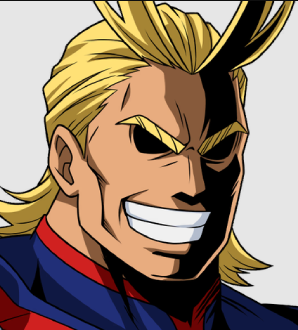
All Might — One For All
Before Deku, One For All belonged to Toshinori Yagi. All Might held it for decades and became the single most powerful hero in the world, a figure so central to public safety that his presence alone lowered crime rates. The weight of being the Symbol of Peace is the weight of a person who knows the system depends on him personally.
By the time the series starts, his body is failing. A fight with All For One years earlier destroyed most of his stomach and respiratory system, and he can only maintain his muscular form for a limited time each day. Every use of One For All is a clock counting down. That's the version of him Deku meets and the version of him that decides Deku is worthy.
Endeavor — Hellflame
Endeavor controls fire at massive scale and intensity. He's the number two hero for most of the series and eventually the number one after All Might's retirement, which is a position he spent his entire life trying to earn and spent his family to pay for.
His quirk is central to his arc because it's the thing he was obsessed with passing down. Todoroki's existence is the result of Endeavor trying to create a successor who could do what he couldn't. Hellflame is powerful. Everything Endeavor did with it is the question the show is actually asking.
Sir Nighteye — Foresight
Nighteye could see the future of anyone he made physical contact with and looked in the eye. Once he activated the quirk on someone, the future he saw was fixed. He could not unsee it and he could not change it.
Foresight is a quirk the series uses for emotional weight rather than combat utility. Nighteye's story is about what it costs to know something terrible is coming and still try to prevent it. His arc with Mirio and Eri is some of the most devastating material in the series, and the quirk is the reason it hits as hard as it does.
Gran Torino — Jet
Gran Torino can propel himself from his feet at extreme speeds, essentially turning his body into a projectile. He ricochets off walls and surfaces to close distance and deliver strikes before most opponents can react.
The quirk is mechanically simple and narratively loaded. Gran Torino was All Might's mentor and the person who trained Deku when it was clear he needed more than All Might could give him. Watching an old man bounce around a room faster than teenagers can track is also one of the series' more enjoyable recurring gags.
Mirko — Rabbit
Mirko has the physical traits of a rabbit, including enhanced leg strength, reflexes, and perception. She's the fifth-ranked pro hero and she got there as a solo act. No agency, no partners, no support staff. She's physical combat and nothing else.
Rabbit sounds minor in a world of elemental manipulation and energy projection. In practice, Mirko is one of the most terrifying fighters in the series because she's faster, more committed, and more willing to take damage than almost anyone she faces. Her appearance in the Paranormal Liberation War arc is one of the best action sequences the show has produced for good reason.
Best Jeanist — Fiber Master
Best Jeanist can manipulate fibers, including the fibers in clothing. He can immobilize an opponent by tightening their own clothes around them, suspend himself in midair using his denim, and turn an entire room of fabric into a control system. He's ranked in the top five pro heroes for most of the series for good reason.
The quirk is a study in unconventional power. Manipulating clothes sounds inane until you realize that almost everyone is wearing something, and that someone wearing something is someone Best Jeanist has leverage over. The character carries himself with theatrical formality that almost feels like a costume itself, and the contrast between his elegant presentation and the brutal practicality of his quirk is part of what makes him memorable.
Best Jeanist is also one of the heroes the show uses to interrogate what hero rankings actually mean. He spends significant stretches of the series sidelined, presumed dead, or recovering, and his eventual return matters to the larger story in ways that go beyond combat.
Edgeshot — Foldabody
Edgeshot can fold his body into impossibly thin shapes, paper-thin sheets, threads, and strips that move at extreme speed. He can compress himself enough to slip through the smallest gaps and strike with the precision of a needle. At full intensity, he can fold his organs to perform delicate work other heroes simply can't manage.
The quirk's most extreme application comes during the Paranormal Liberation War, when Edgeshot folds himself down to a microscopic level to attempt something most heroes wouldn't survive. The scene is one of the series' clearest demonstrations of what these characters are willing to spend to keep people alive, and the quirk is the thing that makes it possible.
Edgeshot is the fourth-ranked hero for most of the series and operates with the discipline of a former covert operative. He's economical with words, economical with movement, and the quirk fits him perfectly.
Fat Gum — Fat Absorption
Fat Gum can absorb impacts into his body fat, neutralizing the force and converting it into stored energy. When he releases that energy, his body slims down dramatically and he gains significant power. The quirk is essentially a damage sponge with an offensive trigger.
Fat Gum is a sidekick mentor to Kirishima and Tamaki during their work studies, and the show treats his teaching seriously. He's the kind of pro who knows exactly how he wants his proteges to grow, and he's willing to take damage himself to give them the experience they need.
The quirk is also one of the more thoughtful examples of body-positive character design in the series. Fat Gum's mass isn't a punchline, it's the source of his power, and the show treats it accordingly.
Ryukyu — Dragon
Ryukyu can transform her body into a Western-style dragon. Full transformation gives her flight, enormous physical power, and the kind of presence that ends most fights before they start. She's ranked in the top ten pro heroes and runs an agency that takes on serious work.
She's also Nejire Hado's mentor during the Big 3's work studies, and the show uses her as a model for what Nejire could grow into. Ryukyu is calm, decisive, and exactly the kind of pro who lets her sidekicks make real decisions in the field. Her presence in the Shie Hassaikai raid is one of the more grounded depictions of veteran leadership the series provides.
Hawks — Fierce Wings
Hawks controls hundreds of red feathers that detach from his wings and fly independently. Each feather can be used for reconnaissance, transport, or as a weapon, and he can sense everything that happens in contact with any of them. At full wing capacity he's one of the fastest heroes in the country.
The cost is replacement time. Every feather he uses has to regrow, and overuse leaves him with reduced wing capacity for extended periods. Hawks spends much of the series burning through his own feathers because the situations he's in don't allow for conservation.
What makes the character compelling is how his quirk mirrors his role. Hawks is a hero who was raised by the Hero Public Safety Commission to be useful in ways other heroes couldn't be. He operates at a distance, through proxies, gathering information most heroes would never see. His quirk is the clearest expression of that. He's everywhere without having to be present.
Mt. Lady — Gigantification
Mt. Lady can grow to giant size, giving her massive strength and visibility. The drawback is that her size makes collateral damage a constant concern, especially in cities.
She begins the series as publicity-hungry, but later arcs show real bravery and growth. Gigantification turns hero work into a question of scale, responsibility, and where a body that large can safely stand.
Gigantification lets Mt. Lady grow to enormous size, turning her into a walking disaster response and a publicity magnet at the same time. The drawback is obvious. She needs space, and in dense urban environments her own body can become collateral risk. Her growth as a hero is partly learning when not to use the most visible power in the room.
Kamui Woods — Arbor
Kamui Woods can grow and control wooden branches from his body. He uses them for binding, mobility, rescue, and long-range capture techniques.
Arbor makes him one of the first pro heroes the series uses to show public hero work in action. His style is clean, controlled, and capture-focused, which contrasts well with louder combat quirks.
Arbor lets Kamui Woods produce and control wood from his body, forming branches for capture, movement, and rescue. His signature move turns wooden tendrils into a cage, which makes him one of the cleaner examples of a capture-focused pro. The quirk feels heroic because it restrains before it destroys.
Gang Orca — Orcinus
Gang Orca has the abilities and traits of an orca, including immense strength, aquatic adaptation, and a paralyzing sonic attack. His appearance often makes civilians read him as villainous despite his hero status.
That tension is part of his role. Orcinus is scary by design, and Gang Orca uses that presence to test students who need to face intimidation without collapsing.
Orcinus gives Gang Orca the traits and abilities of a killer whale, including immense strength, aquatic capability, and hypersonic waves that can paralyze targets. His frightening appearance leads to him being ranked highly as a hero who looks like a villain. The series uses him well as a test of whether students can handle fear without confusing it for evil.
Wash — Clean Bubbler
Wash produces cleansing bubbles that can wash, carry, and protect people. The quirk looks absurdly domestic, but it is extremely useful for rescue and evacuation.
Wash is a perfect example of MHA's commitment to strange powers that still make sense in hero society. Clean Bubbler saves people precisely because it is gentle, mobile, and non-destructive.
Clean Bubbler lets Wash produce bubbles with cleaning and rescue applications. The quirk looks absurd because Wash looks absurd, but he is still a top-ranked hero trusted in crisis work. MHA repeatedly makes this point: the presentation can be ridiculous and the hero can still be completely legitimate.
Crust — Shield
Crust can create shield-like plates from his body. He uses them to block attacks, protect allies, and fight in close quarters with defensive pressure.
His role in the hospital raid gives the quirk emotional weight. Shield is exactly what it sounds like, and Crust's defining moment is spending that protection on someone else.
Shield lets Crust generate hard shield-like plates from his body. It is a clean defensive quirk, and the series uses him in a way that makes that identity matter. His final major moment is not about winning a fight. It is about spending his power to protect someone else.
Manual — Water Pump
Manual can produce and control water from his body. The quirk is modest compared with top-tier powers, but it becomes crucial when paired with Aizawa's Erasure during the war.
Water Pump proves how support from a lower-profile hero can decide a major battle. Manual's ability to keep Aizawa's eyes hydrated turns his quirk into an indirect countermeasure against Shigaraki.
Water Pump lets Manual control and direct water, which becomes crucial during the war when he helps keep Aizawa's eyes hydrated so Erasure can stay active. It is a perfect example of a support quirk becoming essential in the right system. Manual is not flashy, but the fight falls apart without people like him.
Rock Lock — Lock Down
Rock Lock can freeze non-living objects in place by touching them. He can stabilize structures, immobilize weapons, and create temporary platforms or barriers.
Lock Down is a control quirk, and Rock Lock's cautious personality matches it. He is often the adult in the room asking whether the plan is actually survivable.
Lock Down lets Rock Lock immobilize objects in place after touching them. It does not work on living beings directly, but it can freeze weapons, surfaces, and environmental pieces into temporary anchors. His cautious personality matches the quirk, since both are about stability in situations where everyone else is rushing forward.
Gunhead — Gatling
Gunhead's quirk supports a combat style built around rapid close-range attacks, and his hero work is associated with the Gunhead Martial Arts style he teaches Uraraka.
He matters because his training changes how Ochaco fights. Even when his quirk is not explored in great depth, his contribution to the story is clear through the student who learns to throw people instead of only floating them.
Gunhead's exact quirk is less central than his combat style, but his hero identity is built around rapid close-quarters fighting and the Gunhead Martial Arts style he teaches Uraraka. That training changes her role in the story. After working with him, she is no longer just someone who can float opponents. She can put them on the floor.
Ragdoll — Search
Ragdoll's quirk, Search, lets her observe and monitor up to many people at once, including their locations and weak points. All For One steals it because of how valuable that information is.
Losing Search changes her role in the Wild Wild Pussycats but not her commitment to hero work. The quirk's theft also shows why information powers can be more dangerous than raw strength.
Search lets Ragdoll observe and track up to a hundred people at once, including their location and weak points. All For One stealing it proves how valuable information quirks are at the highest level. Losing Search changes her role in the Wild Wild Pussycats, but it does not erase her place in the team.
Mandalay — Telepath
Mandalay can send telepathic messages to multiple people at once. She cannot read minds, but she can coordinate allies silently across a wide area.
Telepath is a rescue and command quirk, and Mandalay uses it like one. Her role during the training camp attack shows how communication can be the difference between panic and survival.
Telepath lets Mandalay send messages directly into other people's minds. She cannot read thoughts, which keeps the quirk from becoming full psychic control, but she can coordinate teams silently and instantly. In rescue and disaster work, that kind of communication is often more valuable than a stronger punch.
Pixie-Bob — Earth Flow
Pixie-Bob can manipulate earth, shaping it into constructs, terrain, and golem-like forms. Her quirk gives her large-scale control in natural environments.
Earth Flow makes her a strong training-camp instructor because she can create hazards and opponents from the landscape itself. She turns the ground into a lesson students cannot ignore.
Earth Flow lets Pixie-Bob manipulate earth, shaping terrain and creating earth beasts for training or combat. It gives her large-scale environmental control in natural settings. During the forest training camp, her quirk turns the landscape itself into an obstacle course built to harden the students fast.
Tiger — Pliabody
Tiger can stretch, bend, and flatten his body with extreme flexibility. The quirk makes him excellent at close combat, evasion, and fast movement through awkward spaces.
As a member of the Wild Wild Pussycats, Tiger is both a fighter and a caretaker. Pliabody gives him a physical style that is tough, mobile, and harder to pin down than his size suggests.
Pliabody lets Tiger stretch, bend, and flatten his body with extreme flexibility. It makes him mobile, hard to restrain, and well suited to close combat and rescue movement. As part of the Wild Wild Pussycats, he brings both physical pressure and a rough kind of care to the students he trains.
Star and Stripe — New Order
Cathleen Bate, known as Star and Stripe, can impose rules on targets by touching them and naming them. New Order has limits, including the number of rules she can maintain, but it is one of the most reality-bending quirks in the series.
As America's top hero and an All Might admirer, she enters the story as proof that the Symbol of Peace inspired the world. Her fight against Shigaraki and All For One permanently alters the threat landscape even though she appears late.
New Order lets Star and Stripe impose rules on a target after touching it and calling its name. The limitations are specific, but the ceiling is absurd, allowing her to alter physical properties, empower herself, or create conditions that bend reality. As America's top hero, she enters late but immediately proves why the rest of the world feared Shigaraki reaching full completion.
Burnin — Blazing Hair
Burnin has flame-like hair she can manipulate and use in combat. As one of Endeavor's sidekicks, she helps train Deku, Bakugo, and Todoroki during their work study.
Blazing Hair makes her visually tied to Endeavor's agency while still giving her a distinct, high-energy style. She is direct, loud, and much more supportive than her boss historically knew how to be.
Blazing Hair lets Burnin manipulate the flame-like hair on her head. As one of Endeavor's sidekicks, she helps train Deku, Bakugo, and Todoroki during their work study at his agency. Her energy is loud and direct, but she also gives the agency a warmth Endeavor himself has historically failed to provide.
Kido — Trajectory
Kido can alter the trajectory of moving objects or people. As an Endeavor Agency sidekick, he uses the quirk to redirect movement and support high-speed hero work.
Trajectory is subtle but valuable around someone like Endeavor, whose battles involve huge force and speed. Kido's job is often to make impossible angles possible.
Trajectory lets Kido alter the path of moving objects or people. Around Endeavor, that kind of support matters because so much of the agency's combat involves speed, flames, and massive force. Kido is not usually the center of the scene, but his quirk exists to make impossible angles possible.
Centipeder — Centipede
Centipeder has centipede-like physical traits and served as one of Sir Nighteye's sidekicks. After Nighteye's death, he helps carry the agency forward.
The quirk gives him an unsettling appearance and practical physical advantages, but his story role is about continuity. He is one of the people left to keep working after a mentor is gone.
Centipede gives Centipeder insect-like traits and an unsettling body shape, which he carries with total professionalism. He serves as one of Sir Nighteye's sidekicks and helps keep the agency going after Nighteye's death. The quirk is visually strange, but his story role is about continuity and loyalty.
Bubble Girl — Bubble
Bubble Girl can create bubbles filled with scents she has smelled before. The quirk can distract, disorient, or support tracking depending on how she uses it.
As Nighteye's sidekick, she is part of the agency's lighter surface and its heavier aftermath. Bubble is playful in concept, but useful enough to belong in professional hero work.
Bubble lets Bubble Girl create bubbles filled with scents she has smelled before. That can be used for distraction, tracking, and support, even if the quirk initially sounds lightweight. As Nighteye's sidekick, she is part of the agency's strange balance of comedy, professionalism, and grief.
Tensei Iida — Engine
Tensei is Tenya's older brother and the original Ingenium. His version of the family quirk has the engines mounted on his elbows rather than his calves, which gives him different combat applications, propulsive strikes and aerial mobility rather than pure ground speed.
Tensei was a beloved pro hero before his attack by Stain left him paralyzed from the waist down. He survived, but his hero career ended in that fight, and the consequences shaped Tenya's arc through the rest of the series. Tenya inherits the Ingenium name eventually, but the path to that inheritance runs through one of the darkest moments his family has ever faced.
The quirk is the same family of ability, but the story is about what gets taken when a hero meets the wrong opponent on the wrong day, and what gets carried forward by the people who loved them.
Big 3
Mirio Togata — Permeation
Mirio can make any part of his body phase through solid matter. It sounds straightforward until you realize the limits. When he's permeating, he can't breathe, can't see, and can't hear. He also loses contact with the ground and falls through the floor.
Permeation is the most training-dependent quirk in the series. Mirio spent years learning to phase in and out fast enough to fight at speed, developing techniques that let him pop in and out of solid objects while maintaining orientation. When he's at full power, he's nearly untouchable. What happens to him at the end of his major arc is one of the hardest things the series asks you to sit with, and his willingness to do it anyway is the point.
Tamaki Amajiki — Manifest
Tamaki can transform parts of his body into anything he's eaten. Chicken wings become actual wings. Octopus becomes tentacles. Clams become shields. The quirk is as powerful as his diet is varied, which is why he essentially prepares for combat by meal planning.
What makes Manifest work narratively is that Tamaki is crippled by social anxiety. He's one of the top students in the country and he can barely look at people when he introduces himself. His quirk is a direct challenge to his personality, it rewards confidence and commitment, and using it well requires him to override everything in his nature that wants to shrink.
Nejire Hado — Wave Motion
Nejire converts her own vitality into spiraling energy waves she can fire from her hands. The output is enormous. The limit is that every shot costs her stamina directly, and sustained use leaves her drained.
Wave Motion is a straightforward offensive quirk in the hands of a character who isn't simple at all. Nejire is endlessly curious about everything, which the show uses for comedy and occasionally for genuine insight. Her willingness to ask people direct questions they'd rather not answer is its own kind of power the quirk has nothing to do with.
Villain
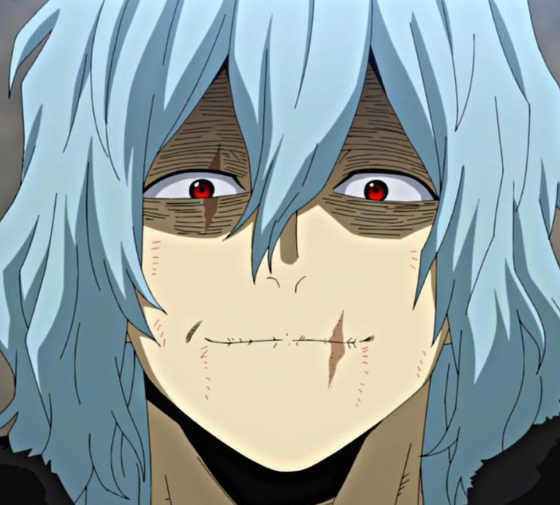
Tomura Shigaraki — Decay
Shigaraki can disintegrate anything he touches with all five fingers. Early in the series it's a horror movie of a power. Anything living or inanimate crumbles into dust on contact.
What the series does with Decay is escalate it in ways that change the entire stakes of the story. By the later arcs, Shigaraki doesn't need to touch something for it to decay. The radius grows. The scope grows. His control grows. A quirk that started as 'he breaks what he holds' becomes 'he breaks the world around him,' and the show makes you feel every stage of that progression.
It's also the quirk of a character shaped entirely by loss. Shigaraki destroying things isn't incidental to who he is. It's the most honest expression of it.
All For One — All For One
The villain after whom the quirk is named can steal other people's quirks and give them to others. He's the counterweight to One For All in every sense. Where One For All is something given freely across generations, All For One is something taken by force and hoarded.
In practical terms, All For One has access to dozens of quirks at once and can combine them creatively. He's the reason All Might is dying. He's the reason Shigaraki exists. He's the gravitational center of the series' antagonist structure, and the quirk is designed to embody everything the show considers the opposite of heroism.
Dabi — Blueflame
Dabi produces flames so hot they burn blue instead of orange. The limit is that his body wasn't built to withstand his own fire, and every time he uses it at full power he's doing damage to himself he can't undo.
Dabi's identity and his quirk are inseparable, and the reveal of who he actually is reframes every fight he's been in up to that point. The series is careful with this one. It lets the quirk carry meaning before the reveal and reread itself after.
Himiko Toga — Transform
Toga can transform into any person whose blood she's ingested. She gets their appearance, their voice, and partial access to their quirks. It's a quirk that weaponizes intimacy, which is exactly how Toga experiences the world.
What makes Transform disturbing isn't the mechanics. It's the fact that Toga loves the people whose blood she takes, and the show refuses to let that be simple. Her quirk is what happens when affection doesn't have a healthy outlet and the person holding it was never taught one.
Kai Chisaki — Overhaul
Chisaki can disassemble and reassemble anything he touches at the molecular level. He uses it to heal, to kill, and most disturbingly to manufacture a drug that suppresses other people's quirks permanently.
Overhaul is one of the most unsettling antagonists in the series because he's not chaotic the way most villains are. He has a philosophy. He believes quirks are a disease on humanity and he's trying to cure them. The Shie Hassaikai arc is about what happens when someone with a truly powerful quirk decides he's entitled to use a child as a factory, and the show makes you feel the full weight of what that means.
Stain — Bloodcurdle
Stain can paralyze anyone whose blood he tastes. The duration depends on blood type, which makes the mechanics interesting but isn't really the point. Stain is a villain who targets pro heroes he considers fake, and his philosophy is coherent enough that it radicalizes other villains after he's already been captured.
Bloodcurdle is a quirk built for assassinations. Stain uses it surgically, taking out the heroes he's decided deserve it and leaving the ones he respects. His brief appearance in the series casts a shadow over everything that comes after. The League of Villains exists partly because Stain's ideas kept recruiting for him long after he stopped being able to.
Twice — Double
Twice can create clones of himself or others. The clones are fully functional and retain the abilities of the original. The limit is his own mental stability. Twice suffered a breakdown earlier in his life that made him unable to tell which version of himself was real, and for years he couldn't use his quirk without spiraling.
Double is the quirk the show uses to explain how a handful of villains become an army. When Twice masters his quirk, he can produce duplicates of duplicates indefinitely, and the arc where this happens is one of the scariest power spikes in the series. His death is one of the most genuinely sad moments the show produces, in part because the people who loved him were villains and the world he was trying to belong to didn't have room for him.
Mr. Compress — Compress
Compress can compress any person or object into a small marble. The compressed target stays alive and unharmed, and he can release them at will. It's a quirk that makes him devastating in any kidnapping or extraction scenario, and the League uses him accordingly.
The character is more interesting than the quirk. Compress carries himself like a performer, quoting literature and styling himself after classic thieves. It's a deliberate affectation over something darker, and the series is patient about showing you what's underneath.
Lady Nagant — Rifle
Nagant can transform her arm into a rifle and fire compressed hair as ammunition. Her shots have nearly unlimited range and can curve around obstacles. She's a former pro hero turned villain, and the fight between her and Deku is one of the best in the series' later stretch.
Rifle is a quirk that rewards patience and precision, and Nagant spent years as a government assassin before her conscience caught up with her. Her arc is about what the hero system does to the people it uses as weapons, and the quirk is a direct metaphor for that relationship. She was pointed and fired, and by the time she stopped being useful, she'd become something the system couldn't control.
Gentle Criminal — Elasticity
Gentle can make any surface he touches elastic, including air. It lets him create trampolines, barriers, and launching pads on the fly, and in the hands of someone with real combat experience it's a strong utility quirk.
Gentle is the villain the series uses to explore a different kind of criminal, a man desperate to be seen and loved, running a streaming channel about his own exploits, failing at everything that would make him a real threat. His appearance during the school festival arc is one of the most tonally unique stretches of the series, and the quirk is the least important thing about him by the end of it.
Kurogiri — Warp Gate
Kurogiri can open warp portals between any two points he can reach. He functions as the League of Villains' primary logistical asset, extracting members from impossible situations, repositioning fighters mid-battle, and getting Shigaraki out of fights he shouldn't survive.
The quirk's real interest comes later in the series, when the show reveals what Kurogiri actually is and how he was made. The reveal recontextualizes every action he's taken across the early arcs, and the questions it raises about identity and consent are some of the more disturbing material the series has to offer.
Kurogiri's relationship with Shigaraki is also the closest thing the early League has to a parental dynamic. He keeps Shigaraki alive, advises him, and intervenes in the rare moments when Shigaraki's instability would otherwise destroy what they're building. Without Kurogiri, the League doesn't survive its first year.
Spinner — Gecko
Spinner has the physical traits of a gecko, adhesive limbs, enhanced senses, and a tail. The quirk gives him strong wall-climbing and parkour capability but limited offensive output. He fights with weapons rather than his quirk because his quirk alone doesn't make him a frontline combatant.
What makes Spinner interesting isn't his quirk. It's the radicalization arc. He started as a Stain follower from a rural area where mutation-type quirks were socially marginalized, and his journey through the League is the show's most direct examination of how ideology recruits people who feel like the system already failed them.
By the later arcs, Spinner becomes one of the loudest voices for what the League actually means as a movement, even as he visibly questions whether the people he's standing with are still the ones who promised him a better world. He's the character the show uses to ask whether revolution can survive its own leadership.
Muscular — Muscle Augmentation
Muscular can grow his muscle fibers outside his body, layering them into massive armored bulk that increases his speed and strength dramatically. At full power, he's nearly impossible to wound through conventional means, and his strikes hit hard enough to crater terrain.
He's one of the most physically threatening villains Deku faces in the early seasons, and the fight against him in the training camp arc is a turning point. Deku breaks his own arms beyond what they've already been broken to win, and the cost of that fight stays with him for arcs afterward.
Muscular is also one of the few villains the series writes without sympathy. He's a killer who enjoys killing, and the show is comfortable with that being all there is to him. Not every villain in MHA needs to be tragic, and Muscular is the proof.
Magne — Magnetism
Magne can magnetize people of opposite genders to attract or repel each other. The mechanic is unusual and the show plays it with a mix of comedy and genuine combat utility, she can pull enemies into her own attacks or fling them away to control battlefield positioning.
Magne is one of the original League members, and her relationship with Toga and the rest of the early lineup gives the group some of its only moments of straightforward warmth. Her death during the Shie Hassaikai arc is one of the most abrupt in the series, and the impact it has on the League is real.
She's also a transgender character, which the show treats with notably more care than the manga's earlier framing might have suggested. The quirk's gendered mechanics are awkward to discuss, but the character's place in the story is genuinely affectionate, and her loss matters to the people who knew her.
Re-Destro — Stress
Re-Destro converts his own emotional stress into physical power. The angrier and more frustrated he becomes, the larger and stronger his body grows. At full output, he's a kaiju-scale threat capable of fighting Shigaraki on something close to even terms.
The quirk is a metaphor that doesn't bother hiding what it is. Re-Destro is the head of the Meta Liberation Army, an organization built around the premise that quirks should be deregulated and people should be free to use them however they want. His personal power literally feeds on his grievances about the world, and the show frames this as both his strength and the hole at the center of his philosophy.
The arc where Shigaraki absorbs the MLA into the Paranormal Liberation Front uses Re-Destro as the test case for what Shigaraki has become, and the fight is a genuine power-spike moment for both characters.
Geten — Ice Manipulation
Geten can manipulate existing ice with extreme precision and at large scale. He can shape it into weapons, terrain, and projectiles, and the limit is more about the available material than his control over it. He's one of the strongest fighters in the Meta Liberation Army and a true believer in their ideology.
The quirk operates as a deliberate counterpoint to Todoroki's. Where Todoroki has to generate his ice himself, Geten can amplify and direct ice he didn't create, which makes him devastating in the right environment and limited in the wrong one.
Trumpet — Incite
Trumpet can amplify the emotional state of anyone who hears his voice through his trumpet-shaped device. He uses it to whip crowds into furor, push allies past their limits, or destabilize opponents emotionally. The quirk is built for a propagandist, and Trumpet is exactly that.
His role in the Meta Liberation Army is as Re-Destro's lieutenant and chief organizer. He's not a frontline combatant in the traditional sense, his quirk works on the people around him, and his contribution to a fight is making everyone else better at the fight they're already in.
Skeptic — Anthropomorph
Skeptic can give human form and motion to inanimate objects within his control range. He animates dolls, debris, and structural materials into puppet armies he commands remotely from a safe distance. The quirk is the closest thing the MLA has to a long-range force multiplier.
The character himself is paranoid, condescending, and almost entirely uninterested in fieldwork. He prefers to operate through proxies, which is what his quirk is built for, and his contribution to the MLA's later operations is as much logistical as combat-oriented.
Nomu — Composite Quirks
The Nomu are artificial humans created by the Doctor, a long-time collaborator of All For One, by combining multiple stolen quirks into a single modified body. The early Nomu are essentially beasts, powerful but not intelligent. The later High-End Nomu retain enough autonomy to strategize in combat and are individually capable of matching pro heroes at the top of the rankings.
The Nomu aren't a character the way other villains are, but they matter to the quirk system because they illustrate what happens when quirks are removed from the people they belonged to and forced into bodies that weren't built for them. The show uses them as a constant reminder of what All For One actually does, and of how far his operation extended while nobody was looking.
Gigantomachia — Multiple Quirks
Gigantomachia is All For One's enormous bodyguard, modified to withstand multiple quirks and extreme physical stress. His abilities include immense size, endurance, morale-based obedience, and destructive power on a disaster scale.
He is less a person in the story than a catastrophe with loyalty. When Shigaraki earns his allegiance, the League gains a living siege engine.
Gigantomachia is less a normal quirk user than the living endpoint of All For One's obsession with bodies that can endure power. His many abilities give him monstrous stamina, size, durability, morale-based obedience, and mass destruction potential. When Shigaraki earns his loyalty, the League stops being a small extremist cell and gains a walking natural disaster.
Kyudai Garaki — Life Force
Garaki's quirk, Life Force, greatly extends his lifespan at the cost of physical vitality, and he gives a copy of it to All For One. As a doctor and scientist, he is responsible for the Nomu project and much of Shigaraki's modification.
His danger is institutional rather than flashy. Garaki turns quirks, bodies, and medical knowledge into an industrial villain pipeline.
Life Force gives Garaki an unnaturally extended lifespan, but his real horror is scientific rather than physical. He uses that time to serve All For One, create the Nomu, and modify bodies into containers for stolen power. The quirk keeps him alive long enough to become one of the main architects of the series' worst crimes.
Moonfish — Blade-Tooth
Moonfish can extend and manipulate his teeth into long bladed weapons. The quirk gives him grotesque reach and cutting power from an unexpected part of the body.
He is one of the Vanguard Action Squad's most disturbing members, less ideological than predatory. Blade-Tooth makes him feel like a horror villain dropped into a forest training camp.
Blade-Tooth lets Moonfish extend and manipulate his teeth into long, blade-like weapons. It is one of the more grotesque quirks in the League's orbit, and the character's restraint mask makes the whole presentation feel like a horror prop. Unlike the more sympathetic villains, Moonfish is written mostly as a dangerous predator.
Mustard — Gas
Mustard releases a poisonous gas that can knock people unconscious over a wide area. He carries a gun because his own quirk does not give him immunity to being physically overpowered.
Gas makes him dangerous before anyone even sees him. His fight during the training camp attack shows how one environmental quirk can turn an open area into a trap.
Gas lets Mustard release a poisonous sleeping gas over a wide area. The drawback is that he is not immune to it, which forces him to wear a gas mask and fight from concealment with a gun. That combination makes him one of the training camp arc's clearest examples of a quirk becoming terrifying through preparation.
Giran — Muddiness
Giran can temporarily make a person's recent memories hazy by touching their head. He is more important as a broker than as a fighter, connecting criminals, villains, and resources.
Muddiness fits someone who lives in the underworld's gray zones. Giran's value to the League comes from contacts and logistics, not raw power.
Muddiness lets Giran blur or cloud another person's recent memories after contact. It fits his role as an underworld broker, someone who survives by connecting dangerous people while keeping information slippery. He is not a frontline villain, but the League's early growth depends on people like him.
Ending — Whiteline
Ending can control painted white lines, including road markings, shaping them into restraints and tools. The quirk is narrow but dangerous in urban spaces.
His obsession with Endeavor makes him more memorable than his power alone. Whiteline turns the city street into a stage for a suicidal attempt to force a hero's hand.
Whiteline lets Ending control the white painted lines on roads, pulling and extending them like binding tape. It is a strange, location-dependent quirk that becomes dangerous because he chooses the battlefield and the hostage situation. His fight matters less because he is strong and more because he forces Endeavor's family trauma into public action.
Hari Kurono — Chronostasis
Kurono can extend clock-hand-like hair and slow the movement of anyone it pierces. The quirk is most effective when he catches targets off guard or after they have already been restrained.
As Overhaul's right hand, he is calm, loyal, and quietly dangerous. Chronostasis supports Chisaki's controlling style by turning escape itself sluggish.
Chronostasis lets Kurono extend clock-hand-like hair and slow anyone it pierces. The quirk is built for ambush, restraint, and finishing an opponent who has already lost momentum. As Overhaul's right hand, Kurono reinforces Chisaki's controlling style by making escape feel physically impossible.
Joi Irinaka — Mimicry
Irinaka can merge into and control objects, and with enhancement he can manipulate an entire underground complex. He effectively turns the Shie Hassaikai base into a living maze.
Mimicry is a defensive nightmare. Irinaka does not just guard the headquarters. He becomes the headquarters, moving walls and rooms to protect Overhaul's operation.
Mimicry lets Irinaka merge into and control objects, including large structures when boosted. Inside the Shie Hassaikai base, that turns the building itself into a hostile body. The quirk makes him one of the arc's best examples of environmental control used for paranoia and defense.
Shin Nemoto — Confession
Nemoto can force people to answer his questions truthfully. The quirk is not physically destructive, but it is devastating for interrogation and psychological control.
Overhaul values him because Confession strips away lies and resistance. Nemoto's devotion makes the quirk even uglier, since he uses truth in service of manipulation.
Confession forces people to answer truthfully when Nemoto asks a question. It is not physically destructive, but in Chisaki's organization it becomes a tool for interrogation, loyalty tests, and psychological control. The quirk fits a subordinate whose danger comes from exposing what people cannot afford to say.
Rikiya Katsukame — Energy Suck
Katsukame can drain stamina from people he touches and use it to enlarge and strengthen himself. With a quirk enhancer, the effect becomes even more dangerous.
Energy Suck is blunt but effective. It turns close contact into theft, making his opponents weaker while he becomes harder to stop.
Energy Suck lets Katsukame drain stamina from people by inhaling, converting their vitality into his own power. The quirk makes him especially dangerous in prolonged close-range fights. It also fits the Shie Hassaikai's larger pattern of treating other people's bodies as resources to be consumed.
Toya Setsuno — Larceny
Setsuno can instantly steal small objects from a target's possession and pull them into his hand. The quirk is ideal for disarming people, stealing tools, or disrupting a plan at the worst moment.
His place among the Eight Bullets comes from desperation as much as loyalty. Larceny is minor in scale, but in the right second it can take away exactly what someone needed to survive.
Larceny lets Setsuno instantly steal small objects from a target's possession and bring them to his hands. It is not a huge combat power by itself, but it is excellent for disarming, disrupting, and creating openings. His place among the Eight Bullets matters because the group is built from people Chisaki found useful after society had already discarded them.
Yu Hojo — Crystallize
Hojo can grow crystals from his body. He uses them as armor, projectiles, and brute-force weapons in close combat.
Crystallize gives him straightforward durability and offense. Among the Eight Bullets, he works best as part of a unit, using his body as the hard point in a coordinated fight.
Crystallize lets Hojo grow crystals from his body for defense and offense. The quirk gives him armor, striking power, and a way to endure punishment while his teammates create openings. Like the other Eight Bullets, he is a subordinate whose usefulness comes from fitting into a coordinated unit rather than carrying an arc alone.
Soramitsu Tabe — Food
Tabe can bite through and digest almost anything. His jaw and appetite make restraints, barriers, and even some attacks less reliable against him.
Food is grotesque but tactically useful. He pressures opponents by making distance and defense feel temporary, especially when paired with allies who can keep targets in reach.
Food lets Tabe bite through and consume almost anything. The quirk turns hunger into a combat style, making him a terrifying answer to barriers, restraints, and durable materials. He is unsettling because his power is not elegant. It is appetite with no normal stopping point.
Kendo Rappa — Strongarm
Rappa's shoulders rotate at extreme speed, letting him throw barrages of punches with overwhelming force. The quirk is built for direct combat and little else.
He is one of the few Shie Hassaikai members who feels more like a fighter than a follower. Strongarm reflects his love of honest combat, even when he is fighting for a rotten organization.
Strongarm lets Rappa rotate his shoulders at extreme speed, producing a relentless barrage of punches. It is a pure fighter's quirk, and Rappa is one of the few Shie Hassaikai members who feels more interested in battle than in Chisaki's ideology. His respect for Kirishima and Fat Gum gives him more texture than a simple bruiser would have.
Hekiji Tengai — Barrier
Tengai can create strong defensive barriers around himself and allies. The quirk is especially effective when paired with an aggressive partner like Rappa.
Barrier makes him the defensive half of a brutal duo. He does not need to hit hard when his job is making sure the person who does hit hard stays protected.
Barrier lets Tengai create a defensive force field strong enough to withstand heavy attacks. Paired with Rappa, it creates a simple but effective combination: one fighter attacks without restraint while the other protects the position. Tengai's calm restraint makes him a natural counterweight to Rappa's hunger for combat.
Deidoro Sakaki — Sloshed
Sakaki can impair the balance and coordination of people around him, making them feel drunk or disoriented. The effect turns basic movement into a problem.
Sloshed is dangerous because it attacks competence rather than durability. A trained hero can survive a punch, but fighting while the room tilts is a different kind of threat.
Sloshed causes nearby people to lose their sense of balance, making them stagger as if drunk. It is a support quirk that makes stronger opponents vulnerable by ruining their coordination. Sakaki himself is erratic, but the quirk is tactically clean: if the enemy cannot stand properly, the rest of the fight becomes easier.
Curious — Landmine
Curious can turn anything she touches into an explosive, including small objects and personal items. She uses the quirk alongside media manipulation and squad tactics.
Her fight with Toga matters because Curious tries to turn a person into a story she can control. Landmine fits a journalist-propagandist who makes everything around her volatile.
Landmine lets Curious turn anything she touches into an explosive, including people when her quirk is applied through contact. As a Meta Liberation Army leader and journalist, she treats other people's trauma as material to be packaged and detonated. Her fight with Toga matters because it pushes Toga's quirk into one of its most important awakenings.
Slidin’ Go — Slide and Glide
Slidin' Go can slide across surfaces at high speed, giving him smooth movement and quick repositioning. Publicly, he operates as a pro hero while secretly serving the Meta Liberation Army.
His role shows how deeply the MLA infiltrates hero society. Slide and Glide is not the problem by itself. The problem is a hero identity used as cover for an extremist movement.
Slide and Glide lets Slidin' Go move smoothly across surfaces, giving him quick mobility and a slippery fighting style. His real importance is not power level. It is that he shows how deeply the Meta Liberation Army has infiltrated respectable hero society, hiding extremist loyalty behind a public hero identity.
Civilian
Eri — Rewind
Eri can rewind a living being's body to a previous state. At low power she can undo injuries. At full power she can undo a person entirely, reverting them to before they were born. For most of her life she couldn't control her quirk, which is why Overhaul was able to weaponize her.
Rewind is a quirk the series treats with care. It's the mechanical solution to problems the plot needs solved, but the show never lets you forget that Eri is a traumatized child who was taught to see her own power as a curse. The moments when she uses her quirk deliberately and out of love are some of the most emotionally grounded material in the series. She's a kid learning that something that can hurt people can also save them.
Inko Midoriya — Attraction of Small Objects
Inko has a minor telekinetic quirk that lets her pull small objects toward her. It's the kind of household-utility quirk that exists in huge numbers in the MHA universe, useful for daily life, useless for combat.
The quirk's relevance is in what it represents. Inko's quirk is the closest thing to a baseline for what most quirked people have. Heroes and villains are statistical outliers. Most people in this world have something like Inko's quirk, and the show occasionally remembers to remind viewers of this.
She's also the emotional center of Deku's home life. Her grief over Deku's situation, her support of his impossible goal, and her steady presence as he becomes someone she barely recognizes are all carried by a character who has a small quirk and an enormous heart.
Kota Izumi — Water Gun
Kota can shoot water from his hands. As the son of the hero duo Water Hose, his quirk carries painful emotional weight after his parents are killed by Muscular.
His role in the training camp arc is about grief, resentment, and the moment Deku proves heroism can still mean something to him. Water Gun is small, but Kota's story is not.
Water Gun lets Kota shoot water from his hands. It is small compared with the powers around him, but that is exactly why his presence matters. He is a child whose parents died as heroes, and his relationship with Deku is about learning that heroism can hurt families and still mean something.
Mitsuki Bakugo — Glycerin
Mitsuki secretes glycerin from her skin, keeping it smooth and giving her a biochemical link to Katsuki's Explosion. Her quirk combines with Masaru's to help explain Bakugo's nitroglycerin-like sweat.
She is mostly a civilian character, but her personality makes it very clear where Katsuki got some of his volume. Glycerin is minor on its own, but important as part of a family quirk inheritance chain.
Glycerin lets Mitsuki secrete a moisturizing substance from her skin, giving her a minor body-based quirk that helps explain part of Bakugo's Explosion inheritance. Her personality is louder than her ability in the story, but the family connection matters. Bakugo's quirk is not random. It is a volatile combination of both parents' traits.
Masaru Bakugo — Acid Sweat
Masaru secretes acidic sweat with combustive properties when rubbed. Combined with Mitsuki's Glycerin, it helps form the inherited basis for Katsuki's Explosion.
His calmer personality contrasts sharply with both Mitsuki and Katsuki. Acid Sweat is mostly background lore, but it is canonically useful for understanding how family quirks blend.
Acid Sweat lets Masaru secrete acidic sweat with combustive properties, though at a much smaller and less combat-focused scale than Katsuki's Explosion. He is mild where his son and wife are explosive, which makes the family dynamic funnier. His quirk matters mainly because it completes the genetic explanation for Bakugo's power.
Rei Todoroki — Frost
Rei has an ice quirk that Endeavor sought out through quirk marriage to balance his own Hellflame. Her Frost becomes the maternal half of Shoto's Half-Cold Half-Hot.
Her story is central to understanding the Todoroki family. Frost is not just a power in the bloodline. It is part of the transaction that damaged everyone in that house.
Frost lets Rei generate ice, the half of Shoto's power that Endeavor wanted for temperature balance. Her quirk is central to the Todoroki family's tragedy because it made her part of Endeavor's plan before she was treated as a person with her own life. Every time Shoto uses ice, Rei's inheritance is present too.
Fuyumi Todoroki — Frost
Fuyumi inherited an ice quirk from Rei's side of the family. She is not a hero, and the series focuses more on her role trying to hold the Todoroki family together.
Frost matters here because it shows how the same inherited trait can lead to very different lives. Fuyumi's power is background, while her emotional labor is the real story.
Frost gives Fuyumi ice-based ability inherited from Rei, though the series focuses far more on her role in the family than on hero work. She tries to hold the Todoroki household together after years of damage. Her quirk is less important than what she represents: the child who stayed and tried to make a home out of the wreckage.
Natsuo Todoroki — Frost
Natsuo inherited an ice quirk like his mother and sister. He is a civilian, and his role centers on anger at Endeavor and grief over Toya.
His quirk is less explored than his resentment, but it belongs in a complete guide because the Todoroki family is built around quirk inheritance. Natsuo shows one of the children who did not become Endeavor's project and still suffered from it.
Frost gives Natsuo the same general ice inheritance as Rei and Fuyumi, but he is not a hero and the series gives him little combat focus. His importance is emotional rather than mechanical. He is the Todoroki child most openly unwilling to forgive Endeavor, which gives the family arc a necessary refusal to tidy itself up too quickly.
Hisashi Midoriya — Fire Breath
Hisashi Midoriya is Deku's father and is said to have a fire-breathing quirk. He is absent from the main story, so the quirk is known mostly as family background rather than something shown in action.
He is a borderline entry, but for an exhaustive quirk guide he helps explain the context around Deku's original quirklessness diagnosis. Fire Breath is canonically named, even if Hisashi himself remains mostly off-page.
Fire Breath is described as Hisashi Midoriya's quirk, though he remains absent from the main story. The quirk matters mostly because it shows that Deku's quirklessness was not inevitable in a family with two quirked parents. His absence also leaves Inko and Deku's relationship carrying nearly all of the emotional weight at home.
Hitoshi Shinso — Brainwashing
Shinso isn't in Class 1-A for most of the series, but he eventually is upgraded from Class 1-B. His quirk lets him take control of anyone who verbally responds to him. If you answer a question he asks, you're under his command until he releases you.
Brainwashing is a quirk the series uses to make a specific point. Shinso grew up being treated like a villain because his power sounded like a villain's power, and his arc is about a kid refusing to accept that framing. It's also one of the most strategically interesting quirks in the show. Nearly useless in a fight against a silent opponent, but nearly unbeatable against someone who can't keep their mouth shut.
Yoichi Shigaraki — One For All
Yoichi was All For One's younger brother and the first holder of One For All. He was born with a quirk that could transfer itself to another person, but it appeared useless until All For One forced a stockpiling quirk onto him.
The fusion of those two powers created One For All. Yoichi matters because he turns the entire conflict into an inheritance story, opposing his brother not through strength but through the decision to pass hope forward.
Yoichi's importance is not that he was strong. It is that his quirk became meaningful only when it fused with the stockpiling power his brother forced onto him. That accident created the one power All For One could not simply take, which makes Yoichi the beginning of the story's entire moral inheritance.
Kudo — Gearshift
Kudo was the second user of One For All and the first person Yoichi entrusted with the power. His original quirk, Gearshift, lets him alter the speed of anything he touches, and inside One For All it becomes far stronger than it was in his lifetime.
Kudo was a resistance fighter against All For One, and his decision to save Yoichi instead of treating him as the enemy's brother is one of the most important choices in the story. Gearshift gives Deku the ability to break normal movement limits, but it also carries severe backlash.
Gearshift began as a modest ability to change the speed of small objects, but inside One For All it becomes absurdly amplified. In Deku's hands, it changes the speed of his own body and attacks at levels that strain even his upgraded physiology. Kudo matters because his quirk is one of the clearest signs that One For All has stopped being just strength.
Bruce — Fa Jin
Bruce was the third user of One For All. His original quirk, Fa Jin, stores kinetic energy through repeated motion and releases it in explosive bursts.
In Deku's hands, Fa Jin becomes a way to simulate higher percentages of One For All without instantly destroying his body. Bruce's role is brief but important because his quirk helps turn Deku's inherited power into something tactical rather than purely muscular.
Fa Jin stores kinetic energy through repeated movement and releases it in a burst. It rewards preparation, rhythm, and sequencing, which makes it one of Deku's most useful inherited quirks once he learns to layer powers together. Bruce himself gets less time than later users, but the quirk changes how One For All functions in combat.
Hikage Shinomori — Danger Sense
Hikage Shinomori was the fourth user of One For All and held it longer than any user before All Might. His quirk, Danger Sense, alerts the user to hostile intent or incoming danger.
His life reveals a hidden cost of One For All. Because he already had a quirk, carrying OFA shortened his lifespan, which helps explain why a quirkless successor like All Might could hold it so long.
Danger Sense warns its user of hostile intent or incoming danger, making it less a shield than an alarm system. Hikage used One For All differently from the more confrontational holders, spending years in isolation training the power instead of trying to defeat All For One directly. His story is also where the series reveals the terrible cost of giving One For All to someone who already has a quirk.
Daigoro Banjo — Blackwhip
Daigoro Banjo was the fifth user of One For All. His quirk, Blackwhip, produces energy tendrils that can bind enemies, grab objects, and move the user through the environment.
Blackwhip is the first previous-user quirk Deku manifests, and its emotional trigger nearly overwhelms him. Banjo helps explain that these powers are not separate gifts, but pieces of the people carried inside One For All.
Blackwhip creates dark tendrils from the user's body that can grab, swing, restrain, and strike. Banjo is the first previous user Deku meaningfully learns from inside One For All, and his personality gives the inherited power a surprisingly warm mentor voice. The quirk turns Deku from a straight-line brawler into someone who can control space.
En — Smokescreen
En was the sixth user of One For All. His quirk, Smokescreen, releases thick smoke that obscures vision and lets the user hide, escape, or reposition.
The quirk is useful because it is not a finishing move. En's power teaches Deku that hero work is not always about hitting harder. Sometimes survival, misdirection, and buying time are the difference between saving someone and losing them.
Smokescreen releases thick smoke that obscures vision and disrupts targeting. It is not a damage quirk, which is exactly why it matters. En teaches Deku that the inherited powers are tools, not automatic upgrades, and that a useful quirk used carelessly can still ruin a fight.
Inasa Yoarashi — Whirlwind
Inasa can generate and control powerful wind currents with extraordinary precision. He can lift people, redirect attacks, and create large-scale air pressure effects.
As a Shiketsu student, he is one of the strongest hero trainees outside UA. Whirlwind matches his intensity, sincerity, and inability to do anything halfway.
Whirlwind lets Inasa generate and control powerful air currents with extreme precision. He can lift people, redirect attacks, create pressure, and control space on a scale most students cannot match. His personality is as forceful as his quirk, which makes him both inspiring and overwhelming.
Camie Utsushimi — Glamour
Camie can create visual and auditory illusions from mist-like breath. Her quirk is built for deception, misdirection, and confusing opponents long enough to act.
Because Toga impersonates her during the provisional license exam, Camie's real personality arrives later than her reputation. Glamour fits her breezy style while also being a legitimately tricky hero-course quirk.
Glamour lets Camie create visual and auditory illusions from her breath. The quirk is excellent for misdirection, infiltration, and psychological disruption. Her light, slang-heavy personality can make her seem unserious, but the ability itself is one of Shiketsu's more subtle tactical weapons.
Seiji Shishikura — Meatball
Seiji can knead and reshape other people's flesh into compact, harmless masses after touching them. He can also manipulate his own flesh more freely.
Meatball is disturbing on sight, and Seiji's elitist attitude does not soften it. The quirk makes him a brutal exam opponent because he can disable people without needing to injure them conventionally.
Meatball lets Seiji manipulate raw flesh, reshaping opponents into helpless lumps if he can hit them. It is one of the most grotesque student quirks in the series, and Seiji's rigid personality makes it feel even more severe. He believes deeply in dignity and standards, while his quirk strips opponents of both.
Nagamasa Mora — Extend-o-Hair
Mora can grow and control his hair at great length. He uses it for capture, mobility, and group support, making him a strong leader within Shiketsu.
Extend-o-Hair is practical and visually striking. Mora's maturity helps frame Shiketsu as a serious rival institution rather than just another batch of students.
Extend-o-Hair lets Nagamasa rapidly grow and control his body hair. It gives him reach, restraint, and large-scale coverage, making him useful in group combat and rescue. As a Shiketsu student, he also reflects that school's more formal, disciplined approach to hero training.
Yo Shindo — Vibrate
Shindo can vibrate anything he touches, including the ground. At high power, he can create tremors that destabilize large areas.
His polite surface hides a more calculating personality, which makes Vibrate feel fitting. He can smile like a model student while preparing to shake the floor out from under everyone.
Vibrate lets Shindo send powerful vibrations through anything he touches, including the ground. He can create localized tremors, destabilize terrain, and hit opponents through surfaces. His friendly public face hides a more calculating streak, which makes the quirk feel sharper than his smile suggests.
Tatami Nakagame — Telescopic
Tatami can retract parts of her body into herself like a turtle pulling into its shell. The quirk is defensive, evasive, and awkwardly useful in close-range danger.
Telescopic is not a flashy power, but it gives her a survival tool few opponents expect. It also fits the more grounded utility quirks seen among non-UA hero students.
Telescopic lets Tatami retract parts of her body into herself, like a turtle pulling into its shell. It is mostly defensive and evasive, but that has real value in a profession where survival matters. Her relationship with Shindo gives her a little more character context than most Ketsubutsu students get.
Shikkui Makabe — Stiffening
Makabe can make objects he touches stiff and rigid. The quirk can reinforce materials, turn flexible objects into weapons, or make terrain less forgiving.
Stiffening is a support/control quirk that depends on imagination. It is not spectacular, but it can change how every object in reach behaves.
Stiffening lets Makabe harden objects by kneading them with his hands. It is a support quirk with clear combat applications, especially when combined with teammates who can throw or reshape the hardened material. Like many other school-side characters, he matters because the quirk system gets richer when not every ability is built for solo fighting.
Itejiro Toteki — Boomerang
Toteki can throw objects so they return to him like boomerangs. The quirk gives him ranged pressure and lets him attack from curved paths.
Boomerang is simple but cleanly heroic, especially in exam settings where precision matters more than destruction. He turns ordinary thrown objects into repeat-use projectiles.
Boomerang lets Toteki throw objects in curving paths that return or strike from unexpected angles. It is a precision and trick-shot quirk rather than a raw power tool. In the provisional license exam, that kind of control matters because the test rewards teamwork and tactical restraint as much as direct combat.
Saiko Intelli — IQ
Saiko's quirk increases her intelligence after she drinks tea and closes her eyes. The boost improves planning, prediction, and tactical analysis.
IQ makes her dangerous as a commander rather than a brawler. Her anime-original role works because she challenges UA students with planning instead of raw force.
IQ boosts Saiko's intelligence dramatically after she drinks tea and closes her eyes. It is a rare quirk that affects processing and planning rather than the body or environment directly. Her anime-original role works because it lets the series explore what a strategist looks like when the quirk itself is mental acceleration.
Why Elegance of Quirk Design
The reason MHA's power system holds up so well is that Horikoshi designed quirks both mechanically and narratively. When a character grows, their quirk grows. When a character breaks, their quirk breaks with them.
That's the thing that separates My Hero Academia from shows that treat superpowers as convenient plot devices or fun. surface-level abilities. The fights matter because the quirks matter, and the quirks matter because they're telling you something important about the people using them.
Wondering where you would fit into all of this if you were dropped into the MHA world? Take the My Hero Academia Character Quiz to find out which character (and quirk) is most aligned with your personality.